
Casting is tossing the fishing rig into the water—for a very basic definition.
Casting, for our purposes, may be better defined as:
a series of actions performed by an angler on a rod and reel to forcefully and accurately guide a line with a rig attached towards a desired location.
Disclaimer: Casting sharp hooks and swinging rods can be dangerous and should be done at your own risk. There is always potential risk of incurring harm to your body and the bodies of people near you when fishing, even if all precautions are followed.
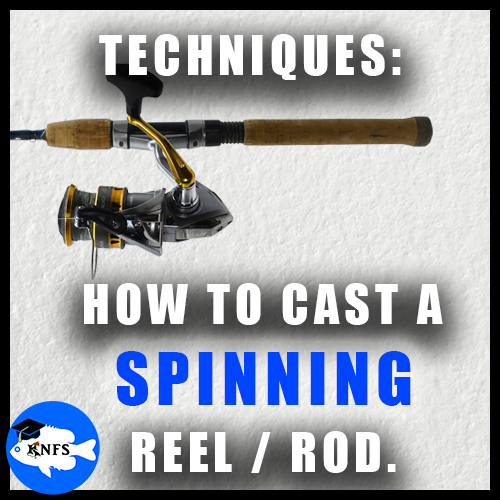
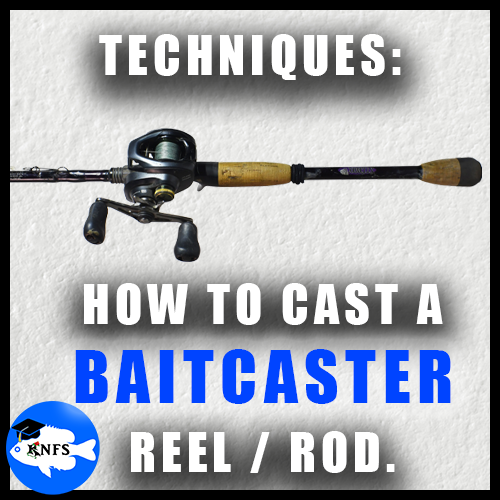
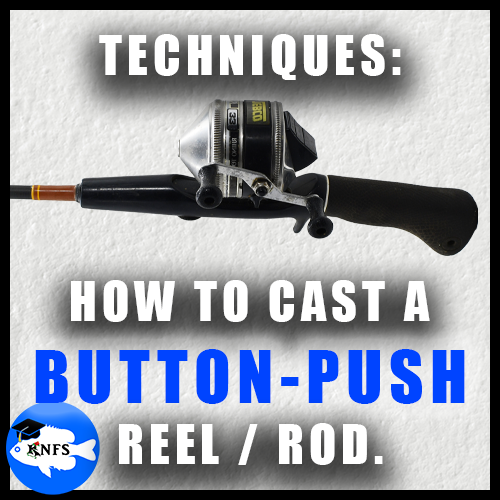
Click on an image below to learn how to cast with a specific rod/reel type or read below for more basic casting information.
There are other ways to get a rig into the water, such as just dropping the rig into the water or throwing it by hand; these techniques are used more so when vertically jigging and trolling. Some anglers are even using drones to drop rigs into spots!
Casting is a skill that an angler will improve upon with practice.
Depending on the weight of the lure being used as well as the weight of the rod and reel, casting can become tiresome if done repeatedly on a fishing trip. For most small rigs, casting can be quite simple and relaxing where most energy is exerted when a fish is on the line.
We’re going to cover casting into three main sections inked into separate pages here on koaw.org, one for each of the rod and reel combinations discussed in the ‘Basic Gear’ section of this guide:
SUMMARY REFERENCE OF THREE GENERAL TYPES
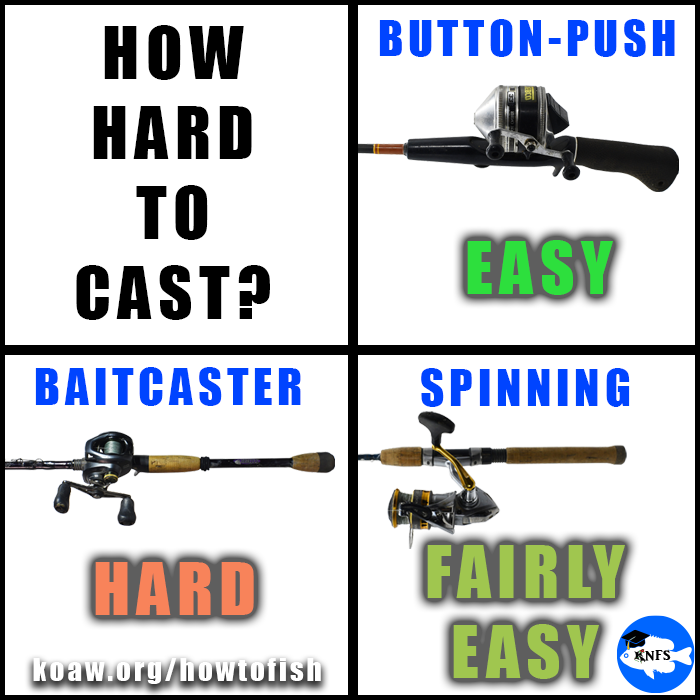
SPINNING REEL & ROD - (Click here for the tutorial)
Fairly easy to use.
Used for small to large species.
BAITCASTER REEL & ROD - (Click here for the tutorial)
Difficult to master.
The baitcaster reel is prone to backlashes (line tangles on the spool) if improperly tuned and handled.
Used mostly for medium to large species.
PUSH-BUTTON/SPINCAST REEL & ROD - (Click here for the tutorial)
Very easy to use.
Used mostly for small to medium species.
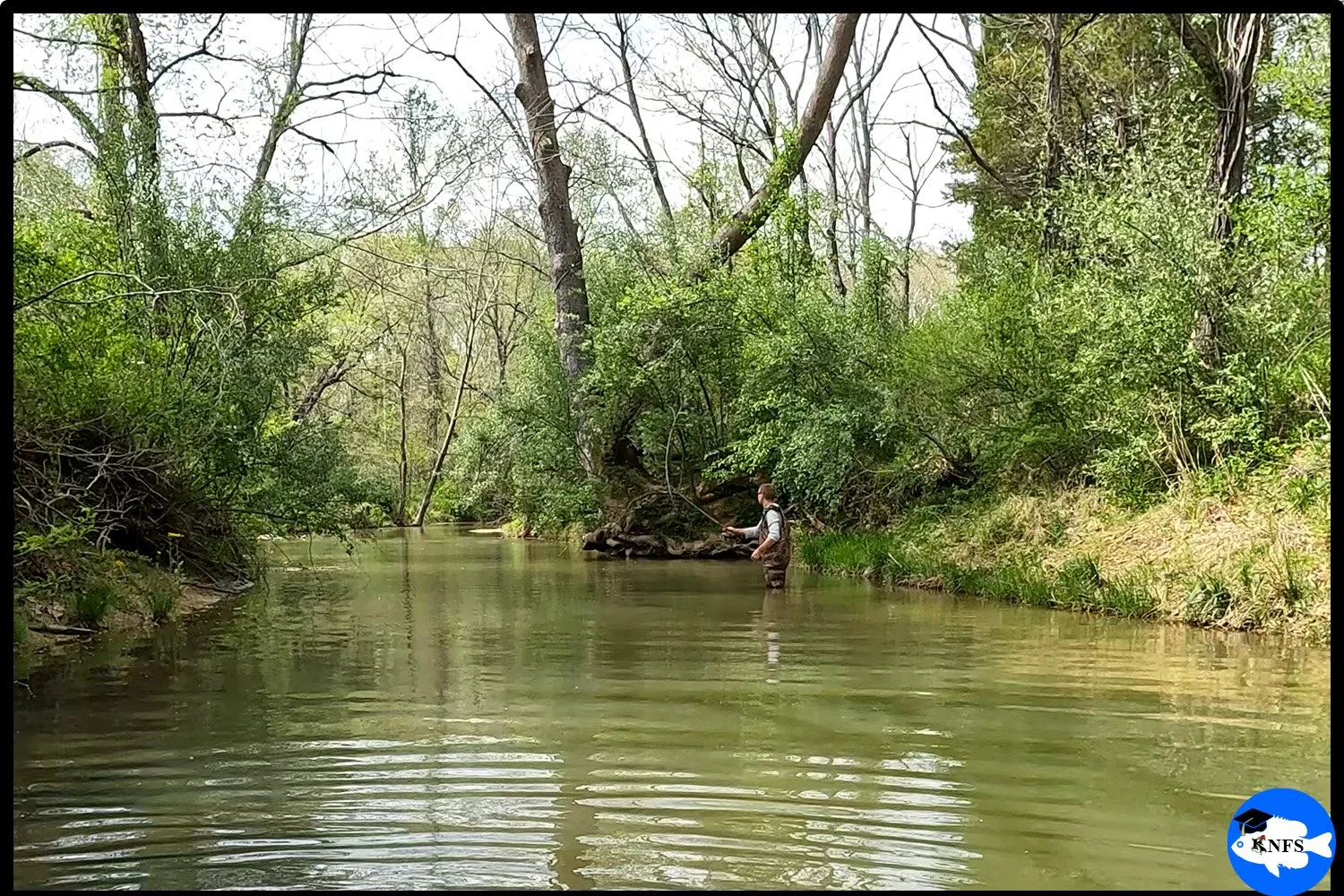
Koaw casting into a creek with heavy vegetation on the bank. Casting from shore is difficult if not impossible in most spots. Wearing waders and walking gently offers opportunity to fish this body of water.
The main goals of casting a rig:
Placement: Accurately place a rig into a desired spot.
Obstacle avoidance: Avoid snagging, hitting, and/or bumping anything with your gear and tackle while casting.
Although some advanced casting involves intentionally hitting objects, such as a dock, to create pressure waves to entice a fish to the area. (We won’t cover advanced tactics on this page.)
Whether on shore, in a boat, or in the water, try to remember that you could potentially be damaging important habitat for another creature.
By mindful to avoid stepping on an important bit of habitat (or creature itself).
Also, there are plenty of stinging insects that can make your fishing day a bit more painful and itchy. Personally, I accept and endure the risks of wandering along various shorelines; I have stepped on nests of Eastern Yellow Jackets many, many times.
The overall goals of retrieving a cast rig:
Avoid slack: Slack in the line (lack of tension) is the angler’s #1 enemy for missing strikes and losing fish.
Catch a fish: We’ll cover tactics for ‘playing’ or ‘fighting’ a fish in other areas of this guide.
GENERAL TIPS
NO HOOK TO START - For first time learners (mainly for young children), don’t use a rig with a hook attached. Instead attach a sinker weight to the end of the line or a weighted jig that has the hook point cut off. The heavier rig will help as casting very light lures is trickier. Once an angler can show that they have control over their casting for 3-5 casts in a row, then go to a rig with a hook.
Even when I’ve taught adults to cast for the first time, there have been some wild flails and dangerous moments of hooks far too close to whacking faces. Hence the next tip…
MIND YOUR FOOTING - A cast is a violent happening—at least if you asked a physicist. Casting involves a bunch of quick movements and different forces acting on different objects all in a short period of time. As anglers, we need to think about two things before we cast:
The first thought we should have, “Will I be able to keep my balance before, during, and after my cast?”
The second thought should be, “If I get a fish, am I going to be in a stable position to land that fish?”
And I suppose, thirdly, “Where and how will I land that fish?”
HAT & SUNGLASSES - This is not just for sun protection, but also protection from rig-related projectiles!
ADAPT - While the basic casting mechanics remain the same for almost all anglers, each of us has our own set of idiosyncrasies when casting. Differing physical builds and individual limitations will mean that some anglers will need to adapt casting methods to what is comfortable.
The casting portions of the guide are written to instruct people with two functional arms—so I encourage those needing to adjust to be creative and adaptable, as any angler should be.
MIND THE WIND - The wind can be a powerful nuisance when fishing or a helpful friend. If casting into the wind with a spinning reel or spincast reel, you’ll likely not get your cast too far unless you are throwing a very heavy lure. If you cast into the wind with a baitcaster reel then you have just exponentially increased your chances of getting a nasty backlash on your spool.
Casting into the wind is an advanced casting skill, especially if using the baitcaster. Special adjustments will be made to the reel, particularly the casting knob, as well as other components to the braking system (including the thumb braking method).
CAN’T RIP SOME BAITS - Rip, in this sense, refers to a cast that is so forceful that the bait on the rig is detached (ripped) from the rig. When casting live bait, especially worms and other fishes, the cast also must be gentle to not damage the presentation of the bait.