WHO NEEDS A FISHING LICENSE?
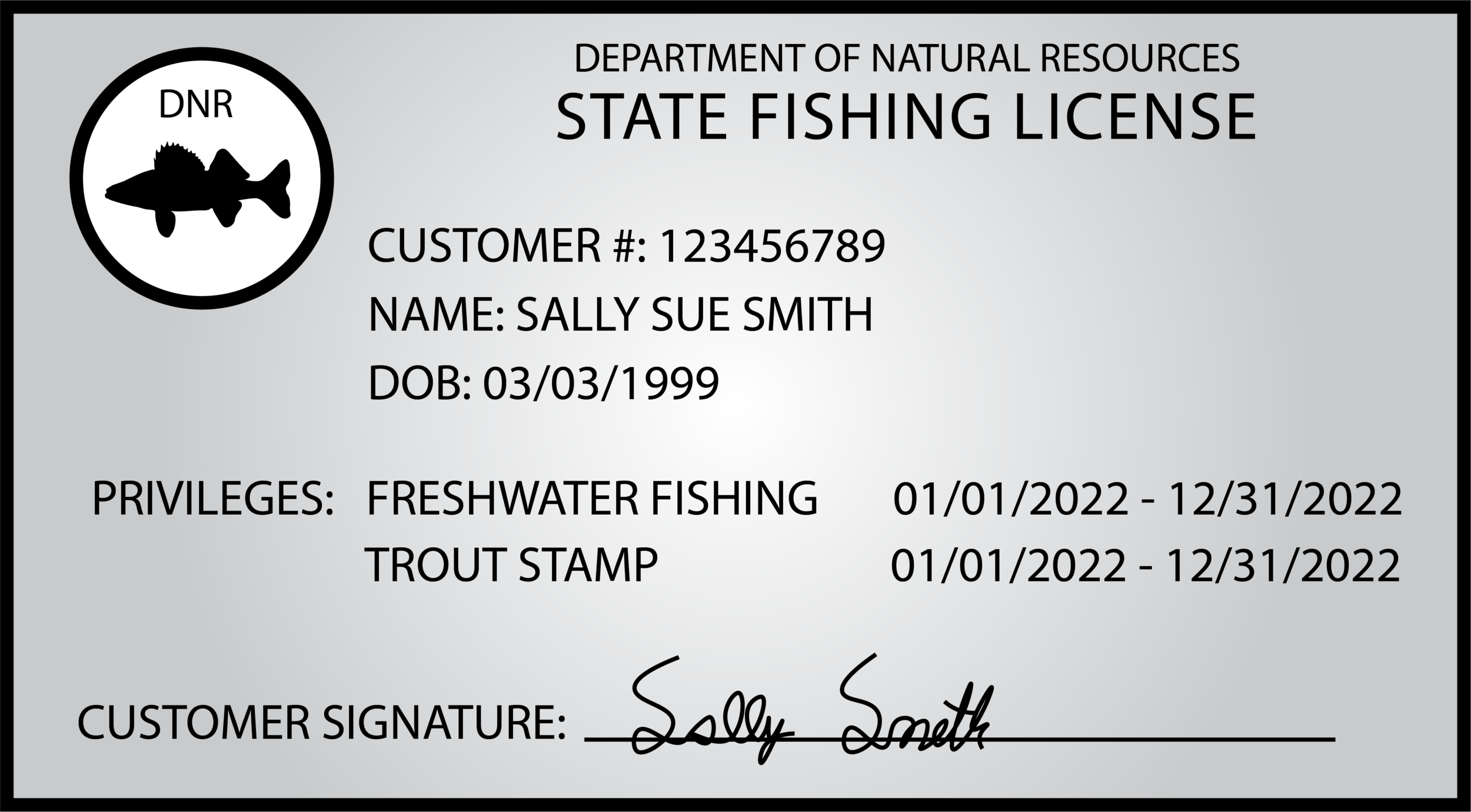
This is an example of what most state fishing licenses look like.
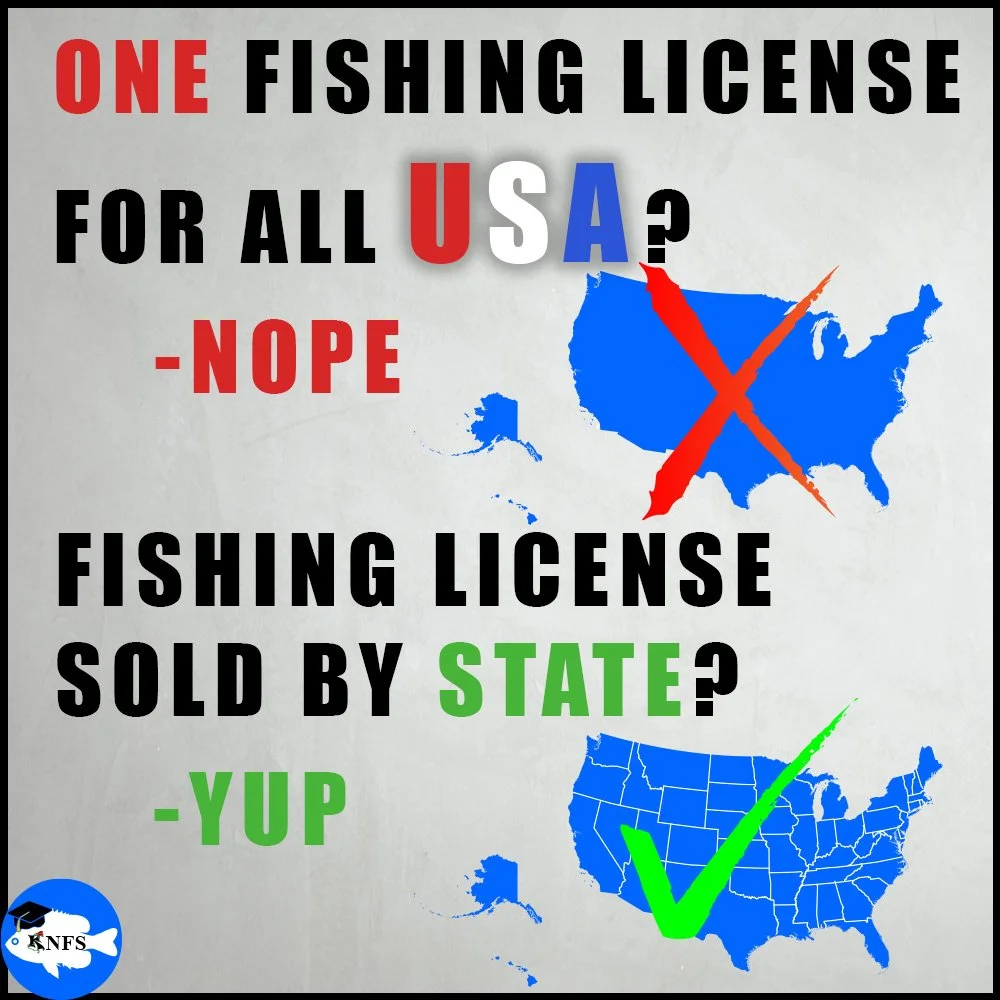
A fishing license is needed for most people to fish in any state within the United States under most circumstances.
Some common exceptions are:
Most kids under the age of 14 or 16 may fish without a license.
Certain individuals with disabilities may also be exempt from needing to purchase a fishing license.
Fishing on a licensed charter boat, or for-hire vessel, sometimes means you will not have to purchase a fishing license. (Check with the charter captain ahead of time.)
Occasionally some specific places within states, such as specific piers, will not require fishing licenses. These exemptions are all dependent on the state’s individual regulations.
Native American communities often self-regulate (to some degree) their fisheries and therefore members of these communities should speak to their tribal governing body to determine how they can legally fish their own tribal waters.
You’ll find the exceptions listed on the state’s website that has the regulations/license information. (More on how to find this info below.)
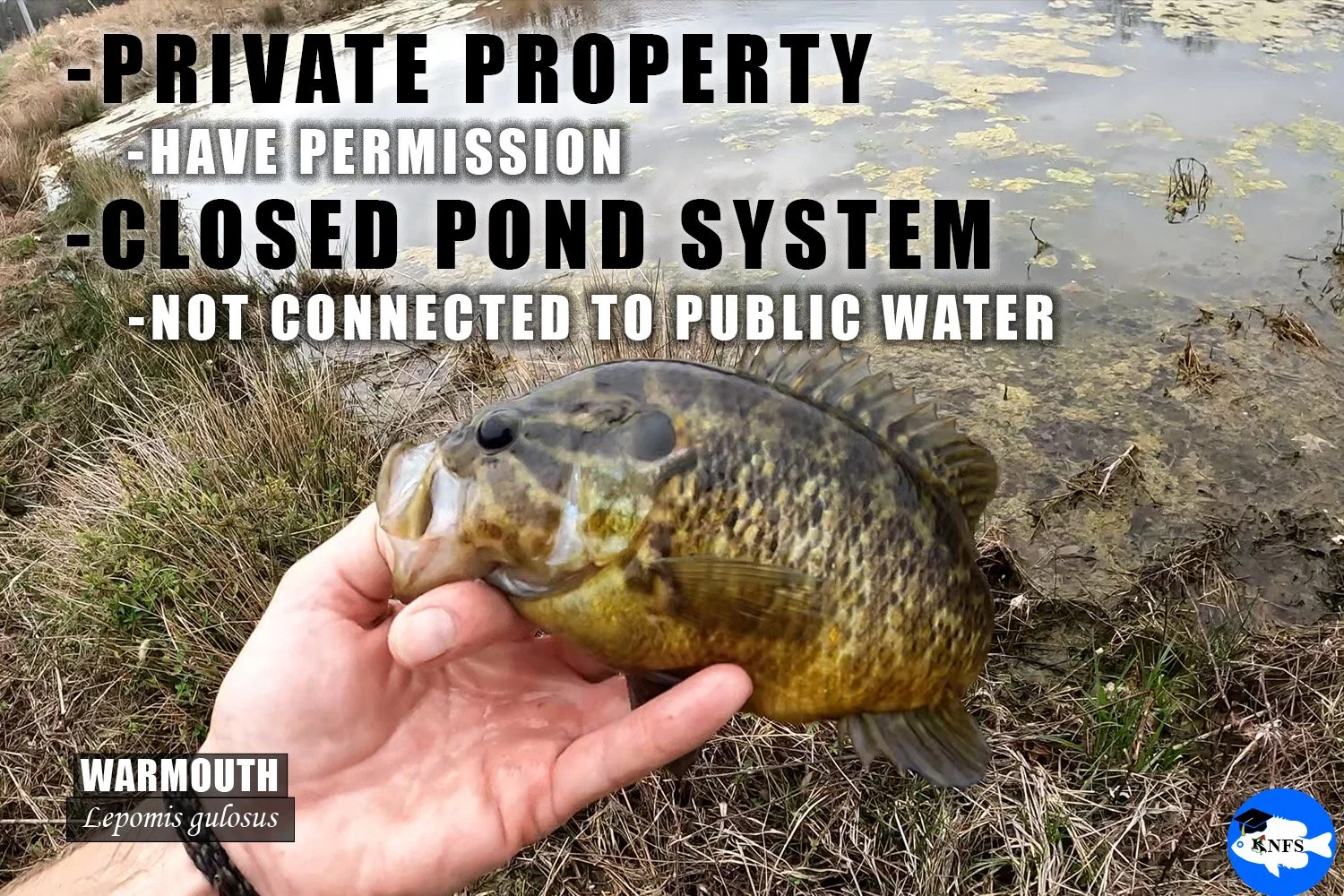
Can I Fish on Private Property Without a Fishing License? Fishing without a fishing license on private property is allowable in most states assuming that the property’s owner has given permission to fish there and that the body of water being fished is not connected to a public body of water such as a creek, river, and lake. Even a small inlet/outlet joining two water sources counts as a connection.
Fishing on your buddy’s closed-system farm pond without a license will be allowable. Whenever in doubt, just call your state’s wildlife management office. I encourage homeowners that have connected water on their property to contact their local wildlife management office to better understand if the water on their property is bound by certain regulations.
TIP: Look for free fishing days offered by many states usually highlighted on the State’s Game/Fisheries/Wildlife website and within the fishing regulations. These days will allow anyone to fish without a fishing license and are usually a couple of days on a weekend in the warmer months. This is a great way to get the whole family outdoors for the weekend and save a few bucks along the way.
HOW TO GET A FISHING LICENSE?
Most bait shops, Bass Pro Shops, Wal-Marts, etc., will sell fishing licenses at their physical locations.
BUY LICENSES ONLINE - IT’S EASIER! Just use a search engine to find the state’s government website that has their wildlife/game/fishing/natural resources department. Typically these sites will all end in .gov but some will not, such as Florida’s website: https://myfwc.com that ends in “.com”.
Type in your state’s name + “fishing license”
Typing “Virginia fishing license” in a Google search engine would bring up the appropriate page option to click.
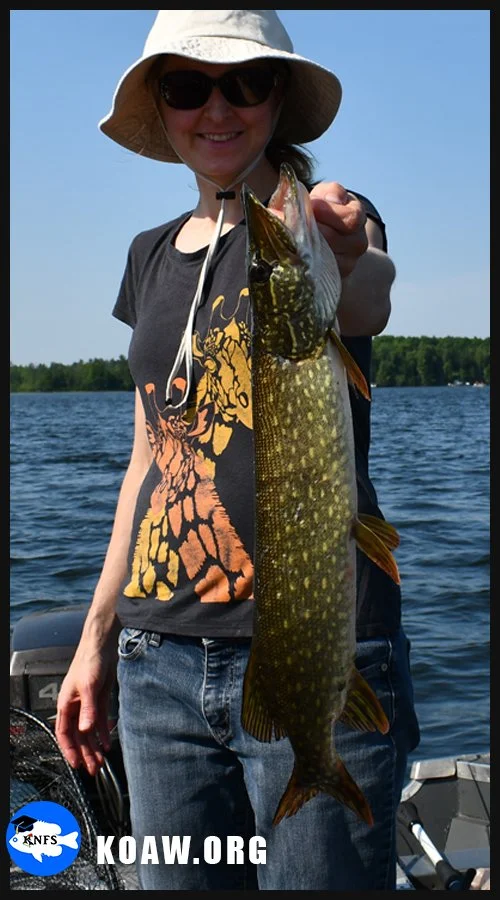
This KNFS recreational fisher has caught a quality northern pike on a lake.
Licenses are sold by duration, such as lifetime, one year, ten days, or one day. You will need to buy the license before you go fishing, though you don’t have to buy your license on the day you go fishing. You will have the opportunity to select the date your license becomes active when you purchase your license.
Licenses may be water-type specific. A state touching the ocean may offer a saltwater license only, a freshwater license only, and a license for both fresh and saltwater. On occasion, additional permits are required to fish certain bodies of water.
For example: Fishing in a U.S. National Forest usually requires an additional permit to access enclosed water bodies. This extra permit is more an ‘access’ permit rather than an additional fishing license.
Licenses may also be species specific. Many states require an extra license or ‘stamp’ be purchased to fish for salmonids (e.g. - Rainbow Trout, Coho Salmon, etc.) because states spend a lot of money raising and releasing these fishes into certain bodies of water.
Recreational/sportfishing licenses are not commercial fishing licenses. Commercial fishers abide by different (yet similar) rules than recreational anglers. Essentially what separates a recreational angler from a commercial fisher is that commercial fishers are selling their harvests or seeking profit in other ways while recreational anglers are typically not allowed to sell their harvests. Your state will, or should, offer a more detailed description of what you are allowed to do with your harvests as a recreational angler.
Basically, select the appropriate license for the type of fishing you want to do and make sure to have a copy of that license with you when you are fishing. (Most game officials will be okay seeing a saved image on your phone nowadays—but check the fine print to see if you need a physical copy on you.)
What if I fish without a license and I am required to have one? If encountered by a game official, that authoritative figure will likely write you a ticket that will likely amount to much more than you could have paid for the license. Buying a license sends funds back into the governmental agencies so that fisheries are managed properly and bodies of water are stocked with catchable fish.
KNOW THE FISHING REGULATIONS
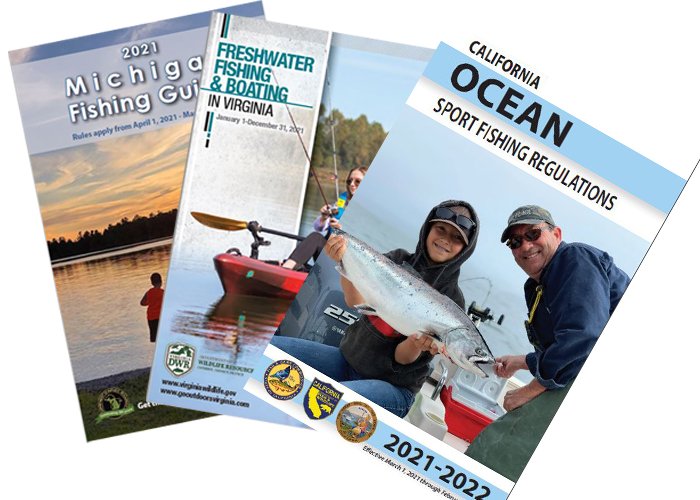
Actual covers from state fishing regulation guidebooks. Publications are PD.
It’s absolutely essential to know your regulations—or at least the relevant parts to your planned fishing trip. Harvesting a fish outside of season and/or smaller than the length limit could result in a pricey ticket if the game warden gets you.
More importantly, the regulations exist to keep fisheries viable and producing catchable fish for all anglers.
Where to Find Regulations: Each state will have a lengthy booklet of regulations that covers fishing and boating rules. These regulations will be found online at the same government website that offers to sell fishing licenses. If you’re buying your license at a physical location, make sure to ask the clerk for a printed regulations booklet. Each state has a .pdf on their website that is updated yearly. You may read and/or download these fishing regulations from their website. Usually Googling the state’s name with the words “fishing regulations” (ex: Virginia fishing regulations) will bring up the appropriate website. Sometimes that search will bring up non-affiliated sites. Remember most of these state websites will end in “.gov” but not all.
Go ahead and find your state’s fishing regulations.
Tip: Don’t trust fishing regulation information from online fishing-forums. Usually, we want to quickly Google an answer. Sometimes those first webpages with suggestions are full of outdated answers posted on fishing message boards. These answers may have been correct at one point in time but it’s important to remember that fishing regulations change year-to-year.
Only access fishing regulations offered directly by the state in their official publications & online resources for the year you are fishing.
(I’m not knocking fishing forums. You can learn a lot from the conversations about fishing on these forums—you can also be exposed to a lot of nonsense. But as far as regulations go, it’s better to get your answers from the correct source.)
Even AI engines like ChatGPT are only doing massive searches of information already on the web, like outdated fishing forums. Always check the most recent official regulations.
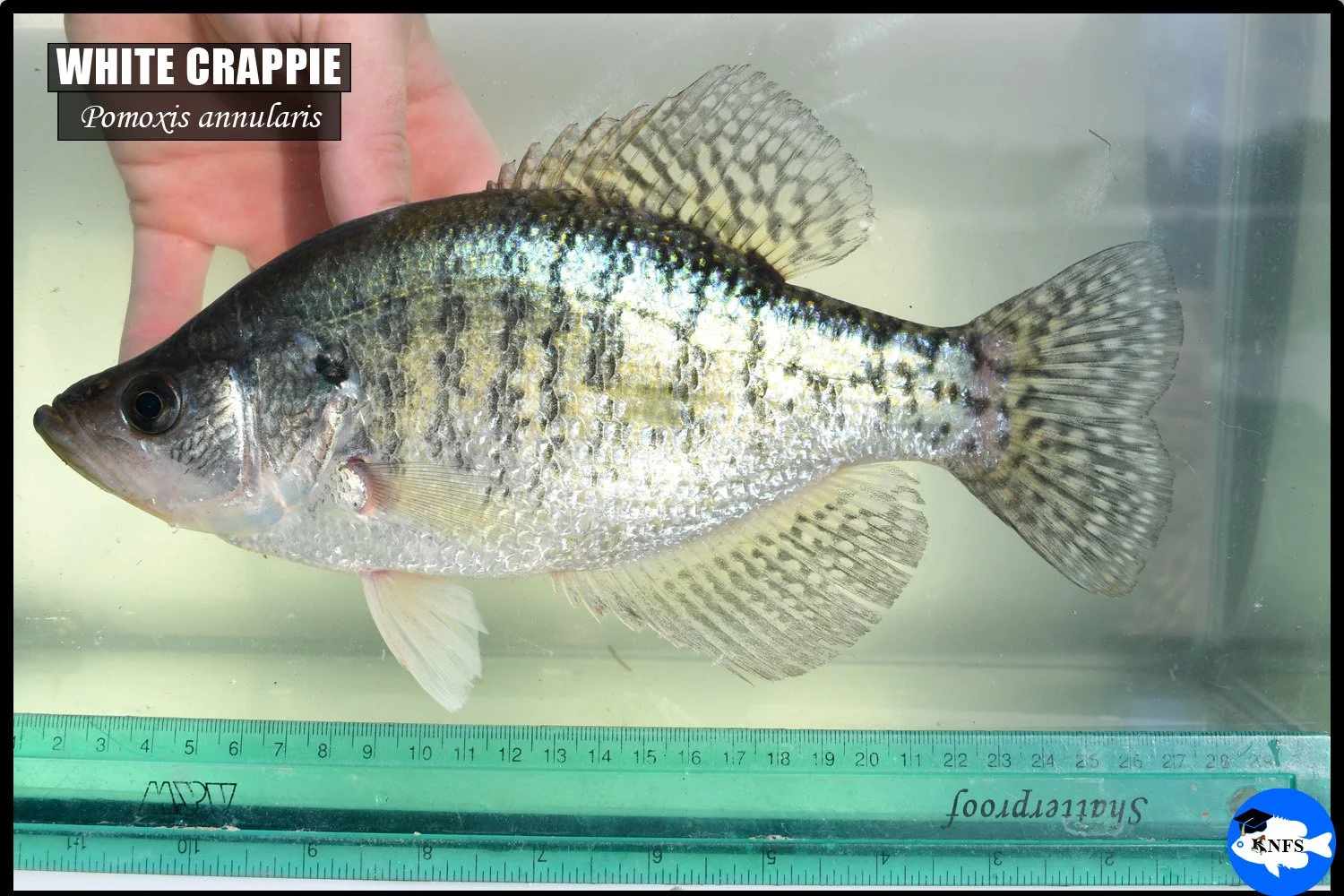
The White Crappie is very popular among anglers. In most all states, this species is considered a gamefish. This fish is easy to filet and has delicious meat.
Length and Harvest (Creel) Limits: This is what you need to know if you are going to take a fish from a body of water. Generally, a state will have a statewide length limit and harvest limit for every regulated species.
Gamefishes are the species targeted most by anglers hence why these species are tightly regulated by the state. Common inland gamefishes are species like black basses, Walleye, salmonids, and crappies. Common saltwater gamefishes are Red Drum, lingcods, snooks, salmonids, and sharks.
Rough fishes are the ‘less desirable’ fishes like carps, suckers, certain catfishes, and many other species. Rough fishes will usually also be mentioned in the regulations with broader limits on length, harvest amounts, and methods of capture.
Baitfishes are usually the small species, like many of the various minnows, and have separate harvest limits and may be harvested by various means, including nets.
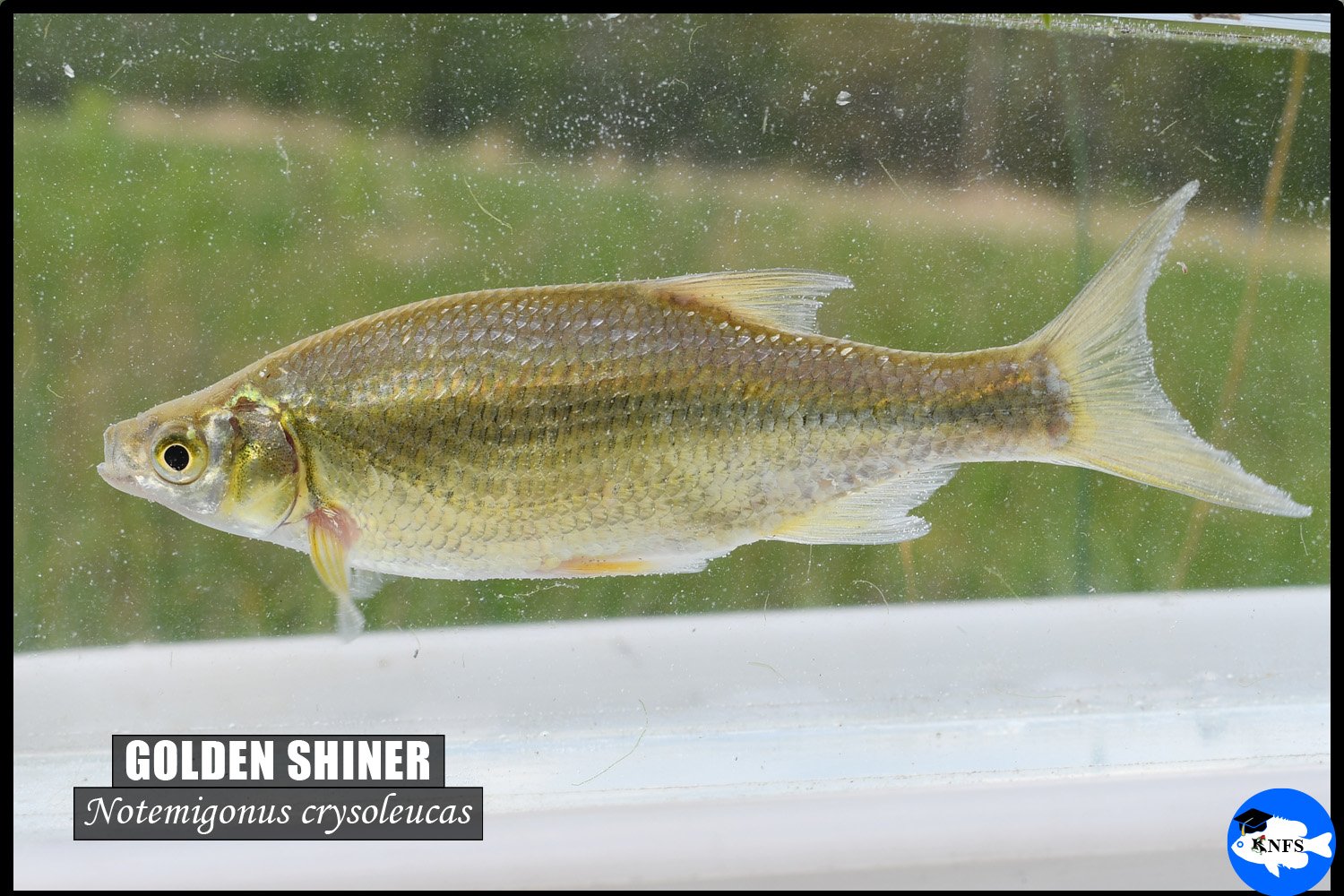
The Golden Shiner is a common baitfish within many freshwater systems. Typically, smaller and younger specimens than the one shown are used for bait, especially among anglers targeting crappies.
Often a gamefish may be used as a baitfish but only if that gamefish was caught by legal means and is within the length limit.
For Example: In Virginia the Bluegill is defined as a gamefish. It is legal to use Bluegill as bait as long as that Bluegill was caught on rod and reel. It would be illegal to use Bluegill as bait if that Bluegill was caught in a net (per the 2021 VA regulations.)
Off-limits fishes: There are certain species that will not be allowed to be targeted at all. These mostly include federally and state threatened and endangered species (see links at end of page.)
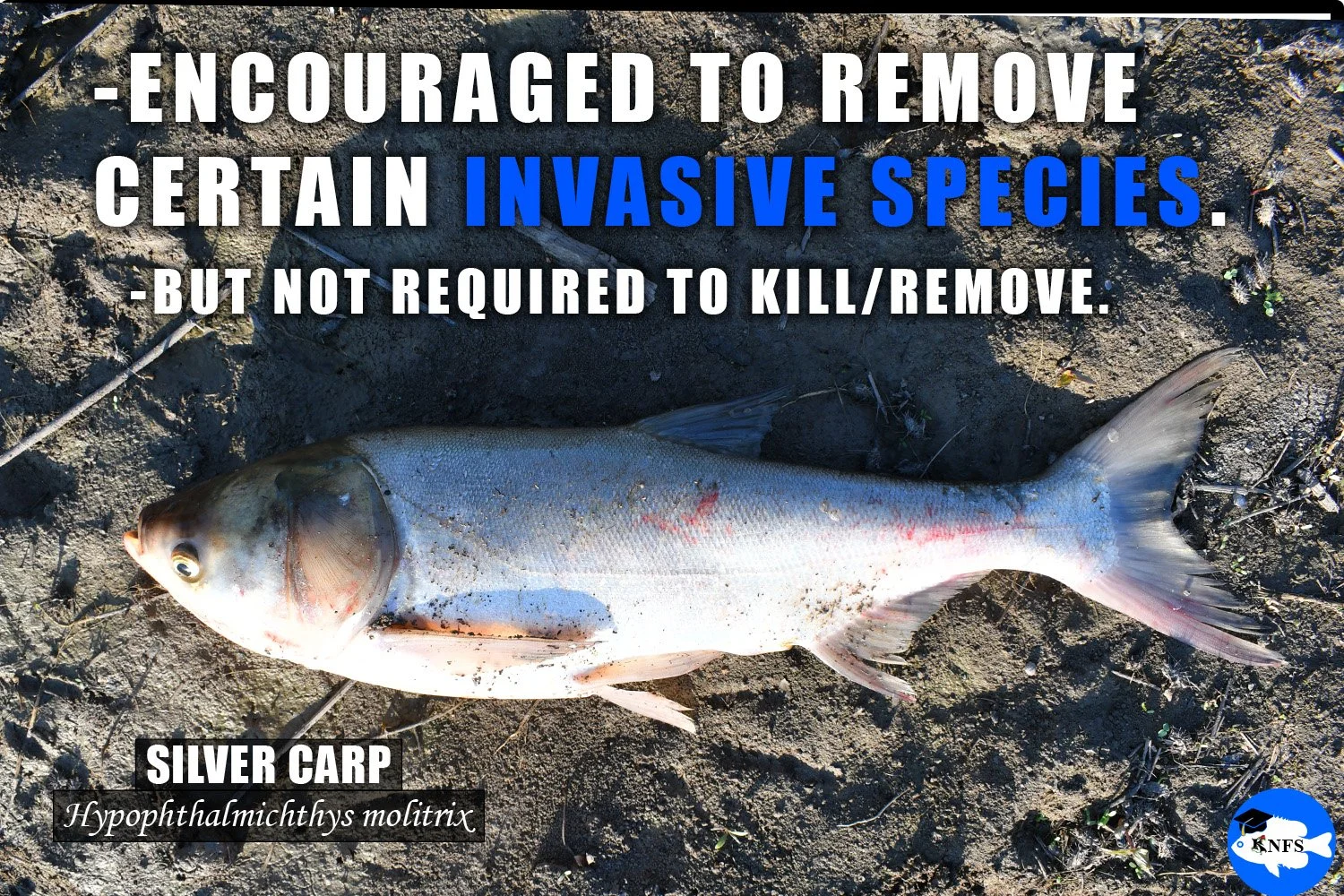
Do I Have to Keep a Fish that I Catch? Any fish caught can be released. Most anglers actually do not keep most of what they catch even if they could legally harvest that catch.
There are some caveats here. One of which being that there are certain invasive species in bodies of water that wildlife officials would prefer that you would not put back into the water if you caught one.
For example, in the United States, the Silver Carp (that jumping carp) is considered a nuisance invasive species. Wildlife officials would prefer that you killed this fish if you happened to catch one and removed the carcass to a proper trash can (or harvest the delicious meat.) As far as I know, regulations in any state cannot force you to kill a fish and/or remove an invasive fish from a system; (thoroughly reading a state’s regulations may reveal a different insight.) Removing a live invasive specimen from a system and transporting it while alive is a big no-no.
If you don’t know what species a caught fish is then definitely don’t remove that fish from a system.
Guessing is not good as many native species look similar to invasive species.
If you are not comfortable killing/removing a species then just put it back in the exact spot you pulled the fish from.
If you are near other anglers, one of them may be experienced enough to offer assistance in identification and removal.
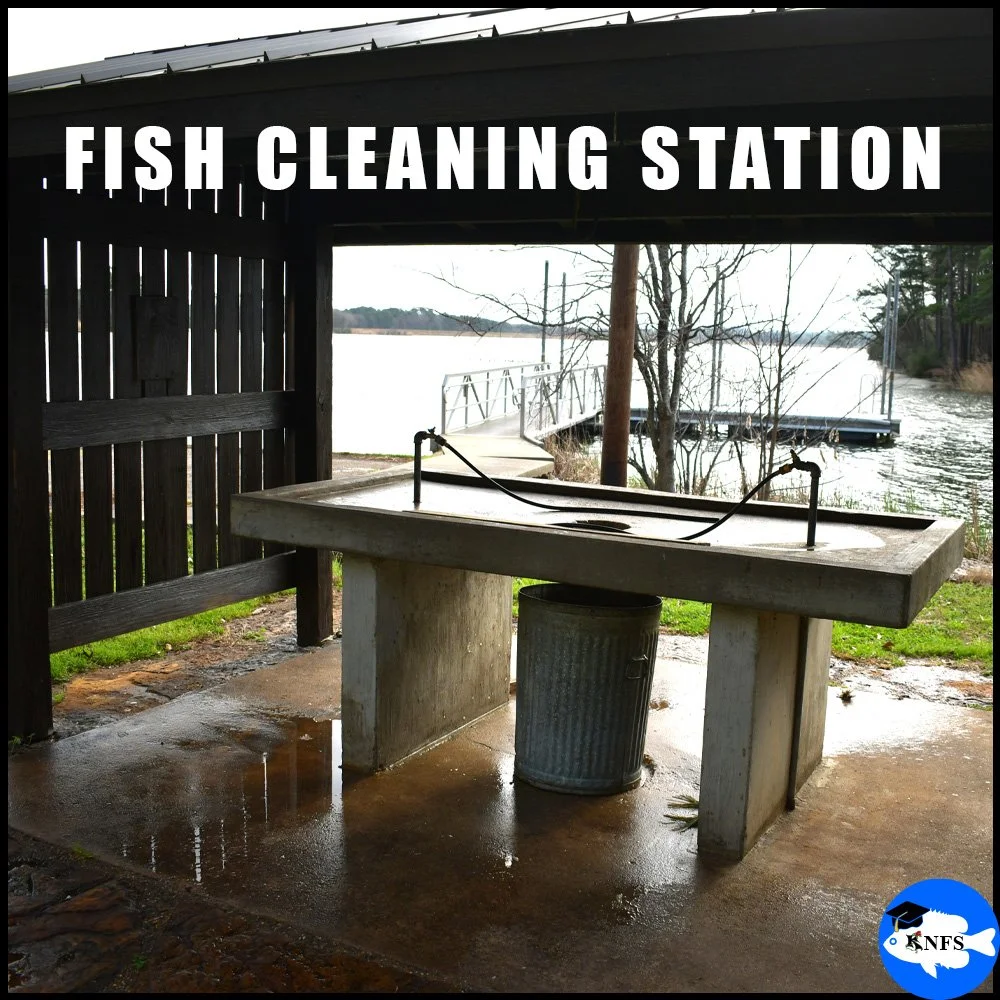
Fish cleaning station: Public resource for anglers to filet their harvest; often has running water and waste disposal nearby.
Catch-and-Release vs. Harvest Fishing: Many recreational anglers only practice catch-and-release fishing. Catch-and-release fishing involves catching a fish and safely releasing it back into the water (usually after a photo has been taken.) Some anglers, like myself, do both catch-and-release fishing as well as fishing to keep fish as food, also known as harvesting.
Both catch-and-release fishing and harvest fishing (that is not commericial) are still considered recreational fishing, or sportfishing, and are bound to the same fishing license and regulations.
A board posting asking anglers to report details on tagged walleye. Sometimes there is incentives involved, such as $$$ rewards, to encourage anglers to report data. This data helps biologists make better decisions to improve fishing on that water.
State Regulations vs. Local Regulations: The statewide regulations will apply to most bodies of water within the state. However, every state will have specific regulations for certain regions and bodies of waters. Typically, these ‘local’ regulations will override, or at least add to, the statewide regulations.
Each state structures their rules differently, so it’s important to check the main regulations and/or the fishing department’s website to see if the body of water being fished has special regulations. If you’re ever unsure about a rule, don’t be afraid to look up the wildlife & game department’s office for that region and give them a call. That phone number should be in the fishing regulations.
Quick Tip: Most bodies of water will have a posting near the boat launch. This posting will usually give specific regulations for that body of water.
Sometimes a posting will mention a survey-experiment going on where fish are tagged and the biologists would like you to take certain actions after catching a tagged fish; (see adjacent photo.)
For me, even if I don’t plan on fishing near a boat launch and/or launching a boat, I’ll do a quick drive-by of this posting and take a photo of the site-specific regulations.
Time of Year Matters: A gamefish species may have a no-harvest season. This season is usually when the species is spawning. Not harvesting during this time of year helps keep the fish populations producing naturally. Sometimes a no-harvest season still allows for you to fish for that species; though you just can’t keep any of that species during that no-harvest time.
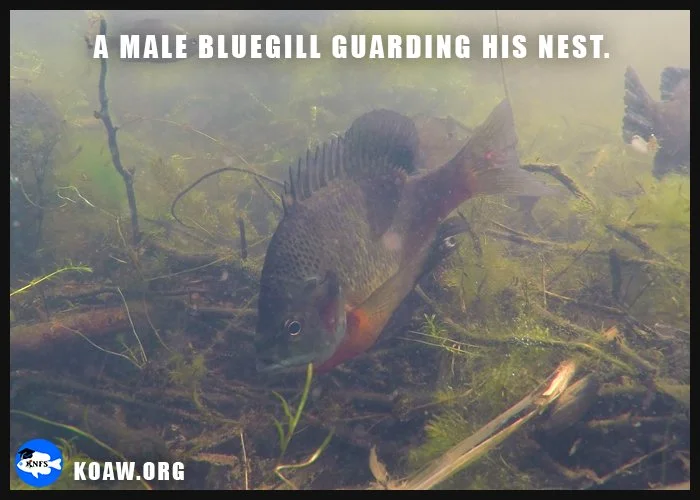
Bluegill - Lepomis macrochirus. This large male will attract females to his nest and then fertilize any deposited eggs. He’ll guard and tend to the eggs at the nest until the eggs hatch.
Is it fine to fish for a species during a spawning period even if it is allowed? That’s not a simple question to answer. Typically the state’s wildlife officials will have established rules that are based on estimated population dynamics and fisheries viability. If the regulations say you can fish for that species during a spawn then you’re probably not going to have a big negative impact on that’s species’ ability to reproduce in that body of water. Sometimes it may be desired to minimize a species’ population and fishing for the species during a spawn is encouraged.
Though, anytime you take a big female full of eggs out of a system, you are taking a lot of potential fish out of that system—that goes for both fresh and saltwater species. Larger females carry more eggs than smaller females. And with many of the sunfishes (Largemouth Bass, Bluegill, etc.) the males (mostly) are the ones sitting on nests and guarding eggs. Males caught off nests and then released may not return to the eggs; in turn the eggs will be eaten and/or deplete as no male is oxygenating and protecting the nest.
For me, even if the regulations allow harvesting during a spawn, I won’t target and/or harvest any big males and females. I may still harvest smaller specimens. For the most part we can trust the advice of the regulations, not just because we are required to by law. The regulations are crafted around the surveys and science performed by fisheries biologists and the likes. We just need to remember that it’s not feasible for any state to know exactly what is best for all of their fisheries; there are too many species in too many bodies of water interacting with way too many variables. These are complex aquatic systems. However, in the last decades, the United States has done a fairly good job across-the-board maintaining viable fisheries. All wildlife management is a never-ending process of adjustments.
WHAT TO FOCUS ON IN THE REGULATIONS:
These regulations may seem intimidating, but the key is to focus on three things:
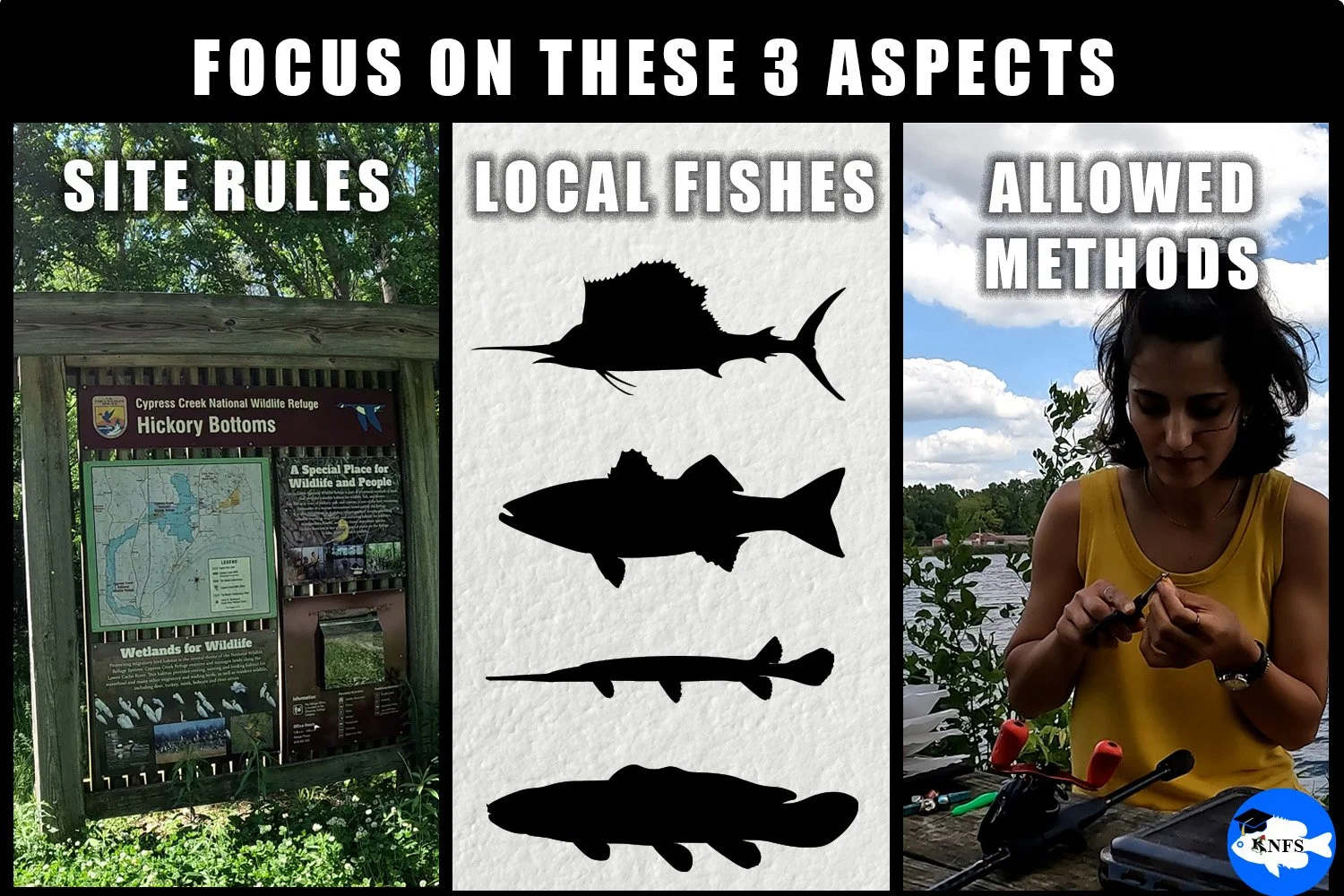
Site Rules: You’ve picked your fishing spot. Now you need to figure out if there are special regulations for that specific area of water. Usually, you’ll need to know what county you are fishing in. Check if there are any special rules for that county like special length limits and disallowable baits. In some waters it’s prohibited to use live and natural baits, such as worms, corn, minnows, and the likes. In these waters you must fish with artificial baits, or baits made of synthetic materials like plastics and metals.
(Keep in mind that any artificial baits with lead or metal composites with lead may be not allowed, especially in creek/river habitats.)
What Fishes Exist?: Get a general idea of the fishes, or the different types of species, you may soon catch. As a new angler you may be like, “How I am going to know what I could possibly catch!?” And that’d be a fair reaction. That’s why I’ve devoted an entire section to understanding potential fishes that you could catch. The fishing regulations should supply an identification chart with all the commonly encountered species for both fresh and saltwater. You need to know what species you are not allowed to even try and catch and all the length and creel limits for the fishes you may harvest.
Some states offer convenient, shortened ‘cheat-sheets’ you can easily print or save on your smartphone for quick reference. It can be a pain reading the full regulations as a .pdf on a smartphone. Often, I’ll just make a few notes in a memo on my phone if the state I’m fishing in doesn’t offer the convenient ‘cheat-sheet’.Fishing Technique/Method: Ideally, as a new angler, you’ll be starting with a simple setup: a rod with a single line. You’ll be starting with a single hook with a bait or a simple artificial bait. This simple setup is typically allowed on most bodies of water. I will present simple fishing rigs for you to try and go over how to fish them later in this guide.
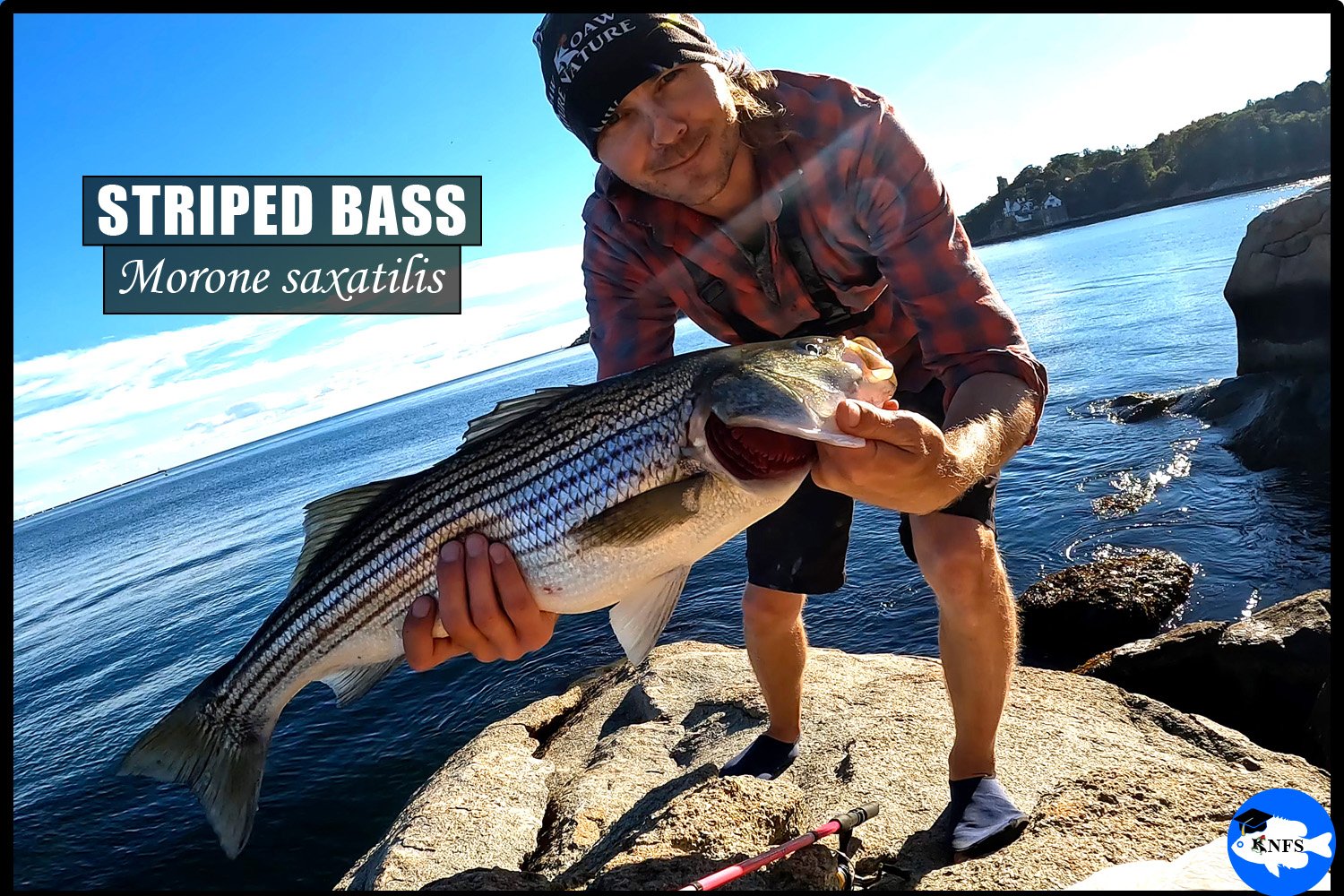
This Striped Bass caught from the ocean in Massachusetts was regulated by both fishing method and by a slot limit. Although I legally caught this fish on a non-offset circle hook while using live bait, I couldn’t harvest this fish because it was about 1” in length below the slot limit. It was safely released back into the aquatic system.
Techniques/methods? Once you learn more-and-more about fishing you’ll learn there are many, many ways to catch a fish, even on rod-and-reel. The terms like A-rig, treble hook, seining, drop-shot, cast net, trolling, may all seem like a foreign language to you. But if you’re starting out with a single hook and line while holding a single rod, you’ll probably be fine fishing for any species while remaining within the regulations.
However, even the type of hook you’re using could be illegal.
For Example: Certain East Coast states require Striped Bass (a common gamefish) to be caught on non-offset circle hooks when fishing with live bait or cut bait. These non-offset circle hooks are more likely to hook a fish in the mouth rather than hooking the gut. This hook type is safer for a hooked-fish that may get released back into the water. It’d be illegal in those certain states to fish with anything but a non-offset circle hook for this species while using live or cut bait.
The good news is that you won’t encounter such meticulous restrictions on hook type for most situations.
Why So Many Rules?!: There are many rules associated with recreational fishing because we are impacting ecosystems by introducing food sources (via bait and chum) as well as removing living animals (yup, all fishes are animals) from these ecosystems. We are putting ourselves in positions to harm and kill animals, and even alter habitats, even if we are practicing catch-and-release fishing.
Fishing is hunting where fishing has a focus on animals in the water rather than on land. We anglers need to follow the rules to keep the local ecosystems healthy and producing. We also have an ethical obligation to not cause more harm than necessary while fishing.
Often what is good and benefiting the fishes in a system will be good for us anglers and our interactions with that system.
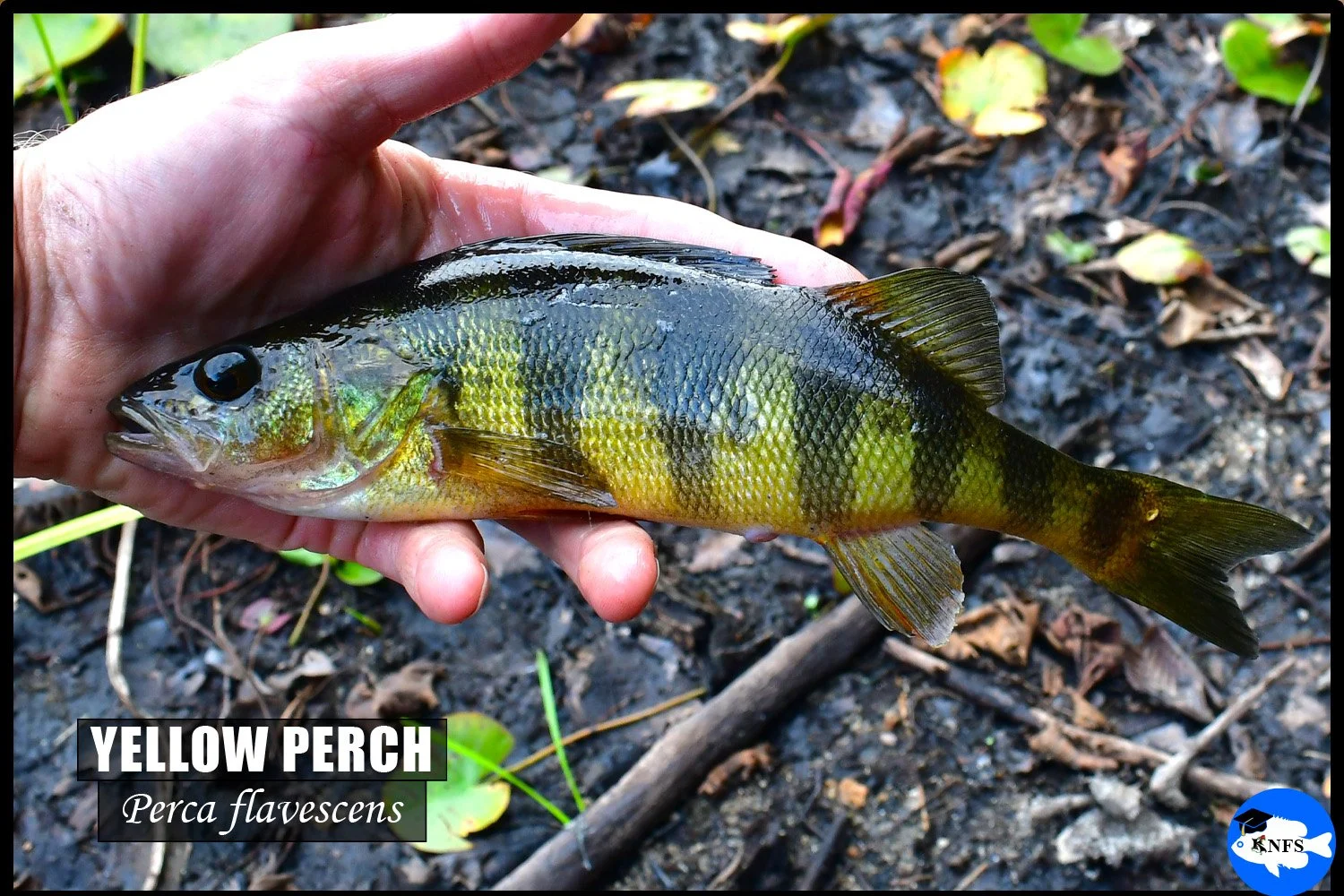
The Yellow Perch is a small species that is easily caught with a variety of methods. This aggressive predatory fish will take baits that are live and artificial. This is a great fish to target for novice anglers because it does not require complicated, expensive gear.
Start Simple for Simple Rules: I always suggest to anyone wanting to learn how to fish to start with a seasoned fisher at their side; someone who knows the rules, tackle, and tricks. Sometimes this means hiring a guide or going on a fishing charter.
Not everyone has the luxury of a fishing friend and/or the money to hire a guide, hence why I made this guide for you. Your first fishing trips should be at easily accessible waters, with easy-to-use equipment and rigs, while fishing for easier fish to catch. Easy = more fun when learning to fish. You’ll soon get the basics down and be ready for bigger fish on more adventurous outings.
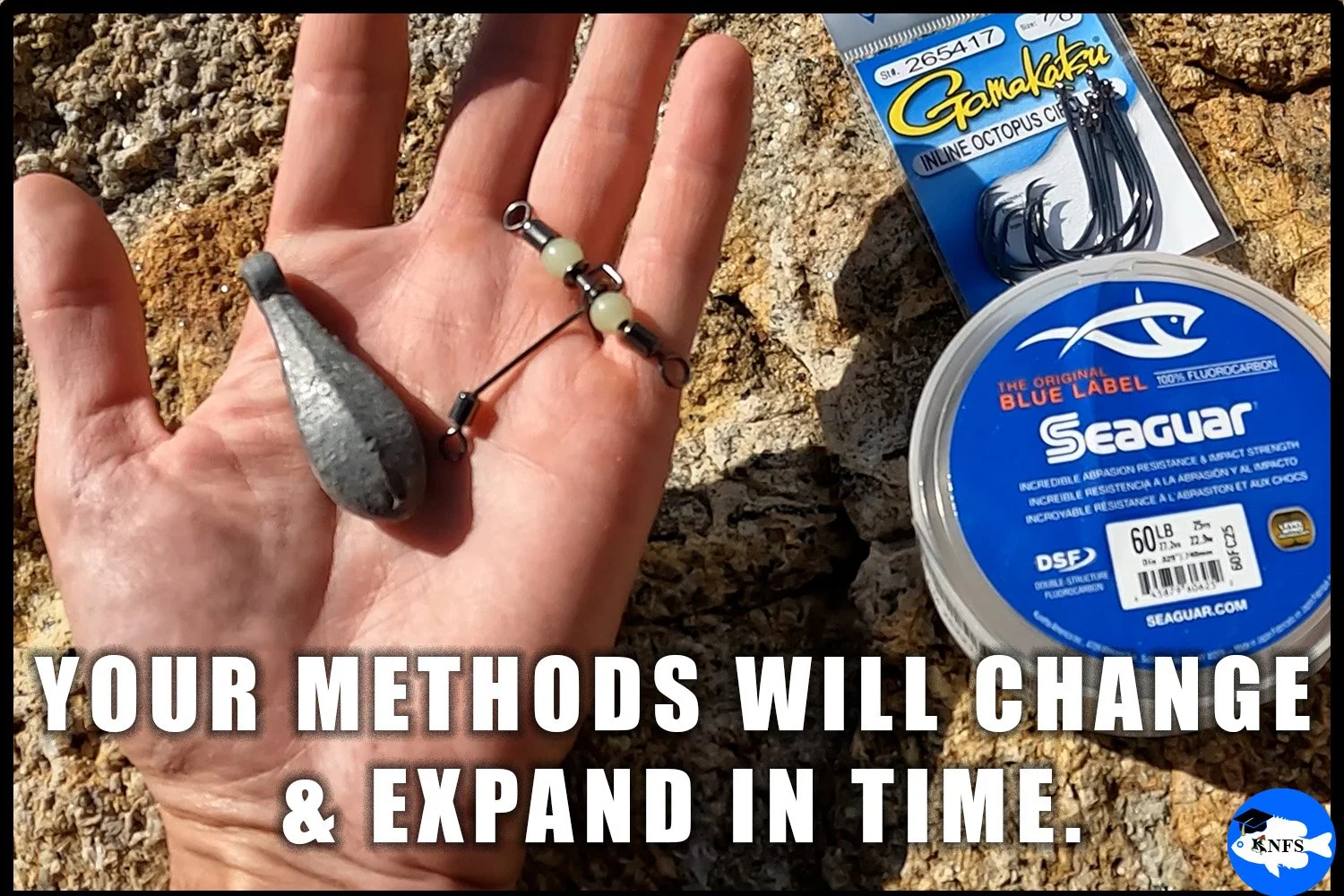
Your Fishing Tactics Will Change: Over time you will start implementing new fishing methods as you go for different species and seek new personal bests (PBs). You may want to start using rigs with more than one hook and you may want to fish with more than one rod at a time.
Each state will have different regulations on how many hooks you may use on a single rod and how many rods you may use at a single time.
You’ll become more adept at understanding any regulations that apply to your everchanging fishing styles.
Endangered Species: Sometimes you may encounter a fish that is protected when fishing. These protected species may not be targeted by anglers, as in, even putting your hook in front of them is illegal. Usually, the state’s fishing regulations will do well to mention what species are completely off limits whether those species are on the endangered species list or not. If you are collecting minnows or other bait from, say a stream, you may very well be getting some protected species in your net.
Never take a fish from a body of water unless you know exactly what species it is and if possession of that species is allowable by law.
You can check for endangered species here: https://www.fws.gov/endangered/ (If the link is broken, as most governmental links end up in time, just type in “federally endangered species list United States” into a search engine.)
NOAA has a list of marine species on the list here: https://www.fisheries.noaa.gov/species-directory/threatened-endangered
Identifying Fish: State regulations and/or pages on the state’s website will offer photos of the common fishes you will encounter when fishing as well as the fishes that are protected. We’ll also go over a free, basic identification tactic in detail later.