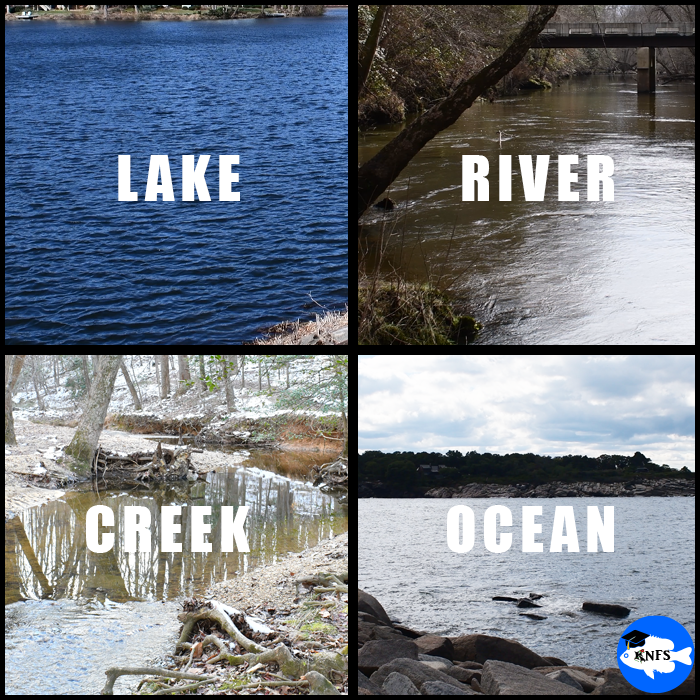
Examples of some habitat types that anglers frequently fish.
One of the most exciting parts of any fishing trip is actually deciding where to fish.
Choosing the water is also the most important part of any fishing trip.
This decision sets the foundation for what fishes you may catch and what regulations you must follow, among other aspects.
IS IT FISHES OR FISH?
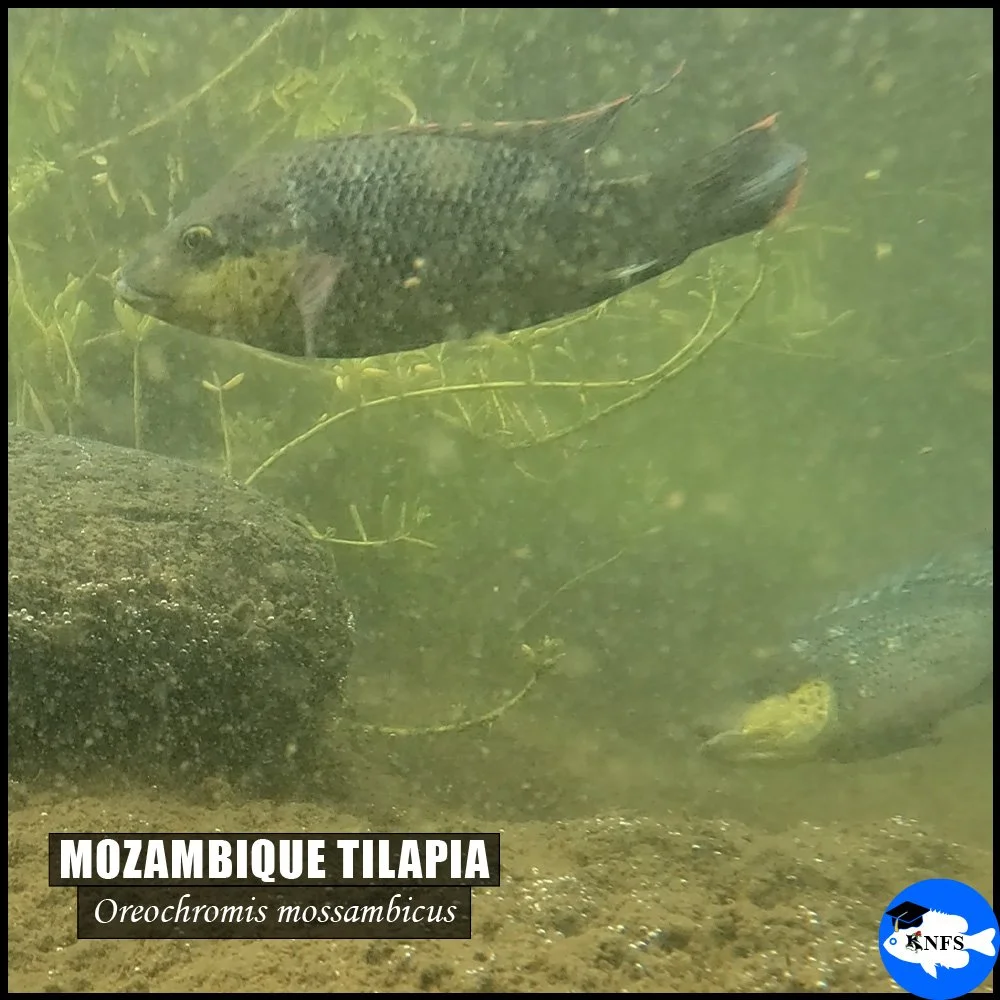
You’ll see the word “fishes” numerous times in this guide.
If the word “fishes” sounds weird to you then you’re not alone. Check out my guide on how and when to use “fish” and “fishes” in a sentence.
But really, it’s quite alright if you just stick with saying “fish” in any situation;
(unless you’re a biologist and/or working in the fisheries field!)
Click to enlarge.
Considering that this guide is catering to novice anglers, we’ll always try to keep it simple.
I recommend to any novice angler to avoid going out on a boat until they are comfortable with basic rod-and-reel mechanics, that is, unless an experienced angler is willing to go along and offer assistance.
That way a new angler can focus on fishing and not all the hassles associated with minding the boat. Even though being on a boat will be advantageous for reaching more areas of the waterbody, shoreline fishing still offers many opportunities to catch a fish.
Avoid kayak fishing on your first expeditions.
Kayak fishing requires many delicate intricacies to be already mastered such as reel mechanics and understanding how to land and handle a fish while also possessing a good familiarity with multitasking on top of water.
YOUR FIRST FISHING SPOTS:
Anytime I get that urge to go fishing, which happens almost every day, the first question I ask myself is:
“What species do I want to catch?”
Click to enlarge. The Striped Bass in the lower right portion of the graphic may attain very large sizes, especially specimens that go in and out of saltwater systems.
As a new angler you might not have any idea of what fishes are in an area. And that’s okay—your first fishing trips are less focused on targeting specific species and more about mastering fishing mechanics. The importance of this question really arises with what type of gear and tackle you’ll need to use—we’ll talk on that later in the guide.
Docks and piers are perfect first fishing spots because they are easy to access, easy to fish from, and various fishes prefer hanging around this type of structure.
When learning to fish your first goals are about getting comfortable with the equipment and understanding how to handle a fish.
This means you’ll want to start on shorelines/piers that are close to home and on level ground.
Most bodies of water will have at least one fish for you to catch. The smaller species are just about everywhere. Having a basic understanding of what fishes you will encounter is helpful. We’ll talk about that more in the fish identification section.
(Left) Boston holds a Black Crappie (Pomoxis nigromaculatus), an absolutely great fish to catch for new anglers that also has delicious meat. Asi holds a fish that we identify in our walkthrough on a simple method to identify fish.
Smallish species are the best to learn on because:
They’re the most abundant.
They require less expensive equipment.
They’re easier to handle.
They’re still fun to catch.
Of course, the very small species, like any of the darters or silversides, are not simple to catch and handle. Fishing for these very small species, and any other species that typically don’t get larger than a handful of inches, is called microfishing. We won’t be focusing on these itty-bitty fishes for novice section of this guide.
Great ‘Starter’ Fishes are Common Sunfishes:
The common sunfishes are the best species to start with on freshwater systems here in North America, of which, I’ve made an entire free online identification guide. You can find a common sunfish in any of the contiguous states within the U.S. in just about any type of aquatic system such as rivers, lakes, ponds, and creeks.
For saltwater systems, you’ll want to start on a pier with smaller to medium hooks to get those smaller to medium species. Going for a shark might seem enticing, but sharks are definitely not a type to pursue without good equipment knowledge and regulation familiarity.
HOW TO KEEP IT SIMPLE:
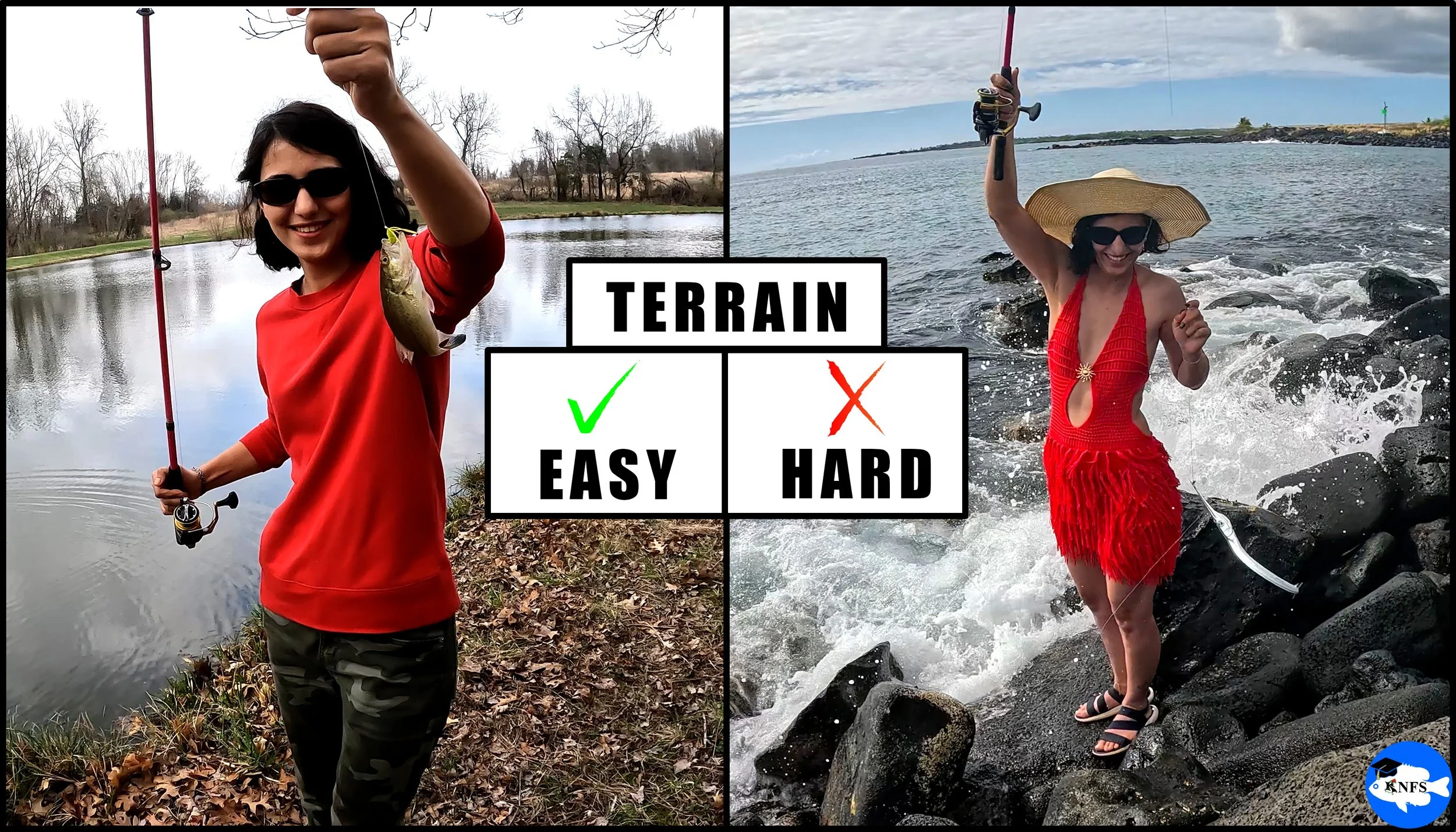
The left image is a good, easy shoreline to start fishing from—it’s level, contains no obstacles, and has plenty of clearance for casting. The right image is NOT a good place for a novice angler as the slippery, unstable rocks are dangerous to fish from.
Pick a Shoreline/Pier/Dock: Whether you’re solo or you’re taking the kids out to learn, start out on level ground with a lot of open space.
This gives you room to setup your equipment.
You don’t have to worry about boating rules.
You’ll be close to the car in case a storm rolls in (or a hook ends up where it shouldn’t.)
Avoid shorelines that are rocky, slippery, steep, and generally difficult to work on. Easy terrain is way more convenient.
Wheelchair access? There are certain docks and piers at state and local parks that have specific sections for wheelchair access. Typically you’ll need to access information on a state or city website to confirm if they have a wheelchair access dock over the water.
Pick a Location Close to Home: The local pond by the hardware store might be the ideal place to start if you’re allowed to fish there. More than likely that pond has some Bluegill and a species of black bass. It’s only minutes away. It’s the perfect place to get comfortable with fishing equipment. And what is likely, that hardware store sells some live bait like worms.
RESOURCES TO FIND FISHING SPOTS
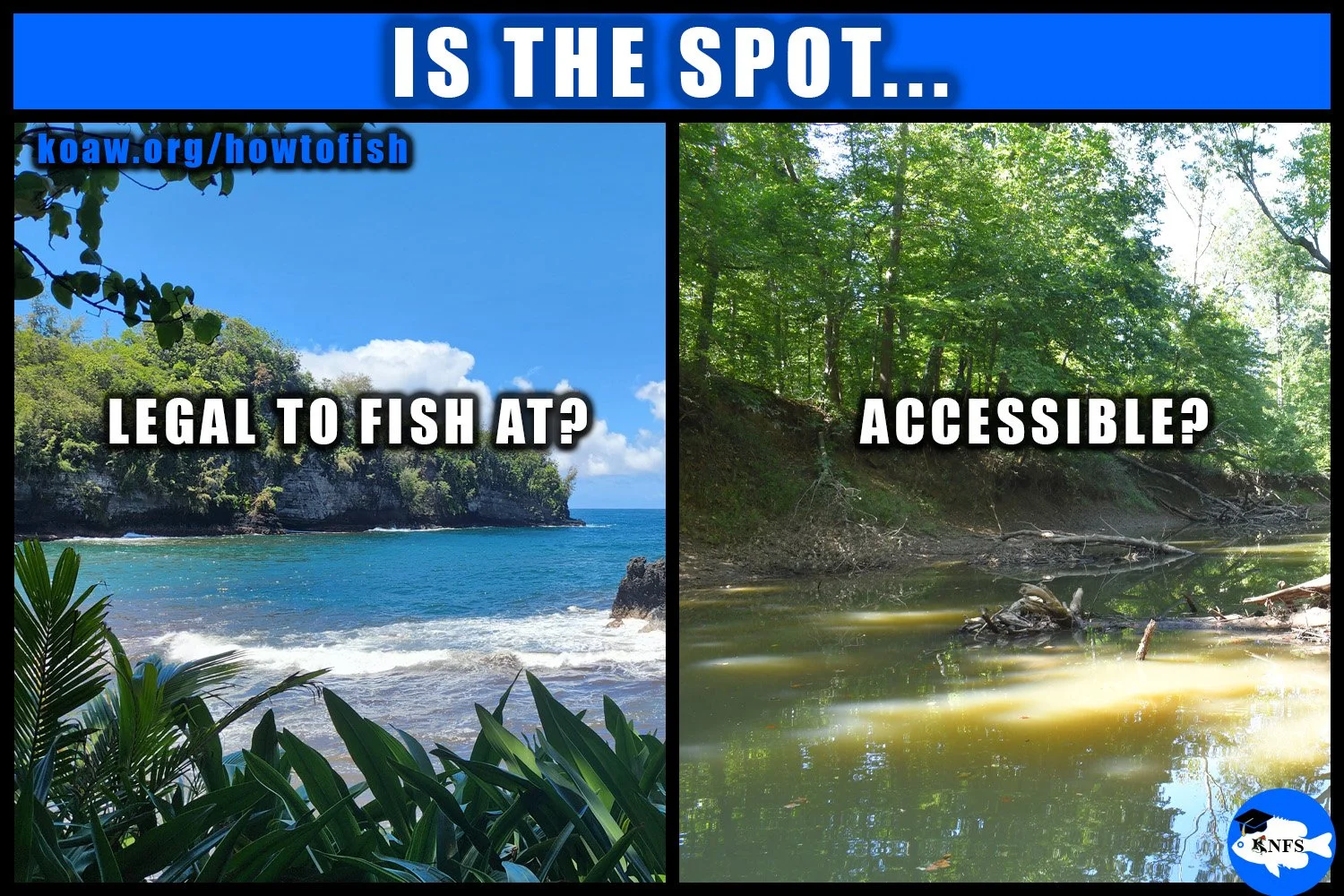
I’d imagine that you already have a few fishing spots in mind—perhaps you’ve seen people fishing somewhere and/or heard your friends talking about a good spot to fish.
You’ll have a number of options when picking fishing locations.
Your initial main concerns should be:
Is it legal to fish on that body of water? On that shoreline?
How will you legally access that spot? Driving? Walking?
Parking is available? Free?
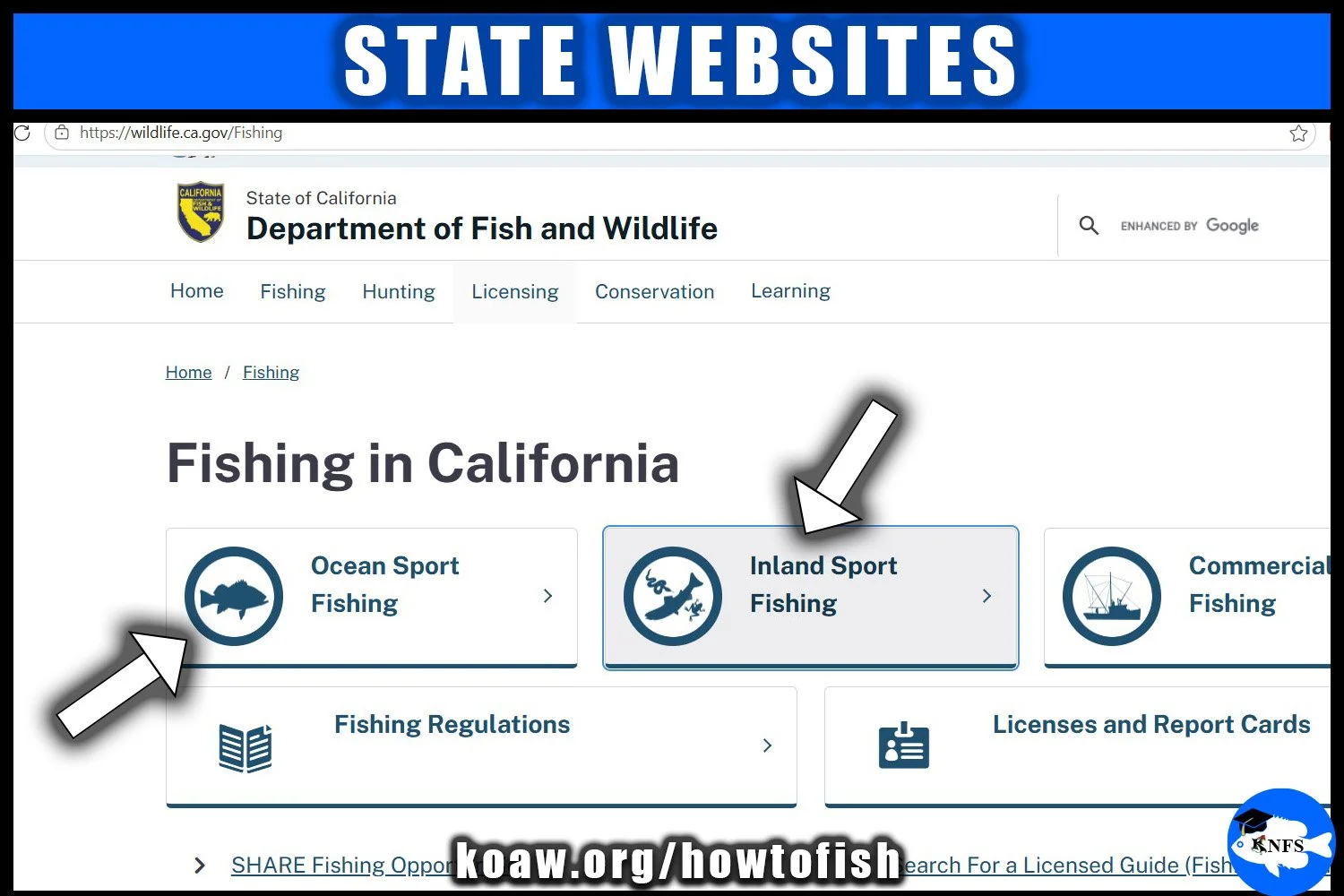
An example of California’s Department of Fish and Wildlife content that guides anglers to fishing areas with regulations.
State’s Website: The section of your state’s government that manages fisheries is the best place to start.
Go to Google or your favorite search engine and type in your state’s name with the words “fishing license” or “fishing regulations” as this should bring up the government site. E.g. – “California fishing license”.
Most all official state government sites end in “.gov” but a few won’t.
Once in the state’s website, you should be able to find “Where to Fish” sections.
You may also download the fishing regulations that may offer locations. (We discuss regulations and licenses in the next section.)
State parks are great places to get your line in the water, though many parks get overcrowded on the holidays and weekends in the warmer months. Many parks also require entrance fees, so keep that in mind.
Land Ownership/Mapping Apps like onX Hunt will reveal exactly who owns what property. These apps do cost money but are well worth it once you become more explorative in your fishing destinations. For example, when I fish in the United States, I like to wander into remote forests and find hidden waters; I need to know if what I want to fish is private or government land. If it’s government land, I’ll then learn whether it’s state or federal land and what agency governs the plot, and then I’m able to examine the location regulations set forth by that agency at that spot.
Google Maps: Pull up a map on your smartphone and find nearby bodies of water. If that body of water is not mentioned in your state’s website, it may still be allowable for fishing. You’ll just have to look for “Private Property” or “No Fishing” signs. A Google search of “Is it legal to fish at Blah-Blah Lake?” will probably reveal a good answer.
What’s pretty amazing about today’s technology is that you can use the ‘Street View’ technology to see if there is any signage saying if fishing is allowed at that location. This has saved me time on numerous occasions.
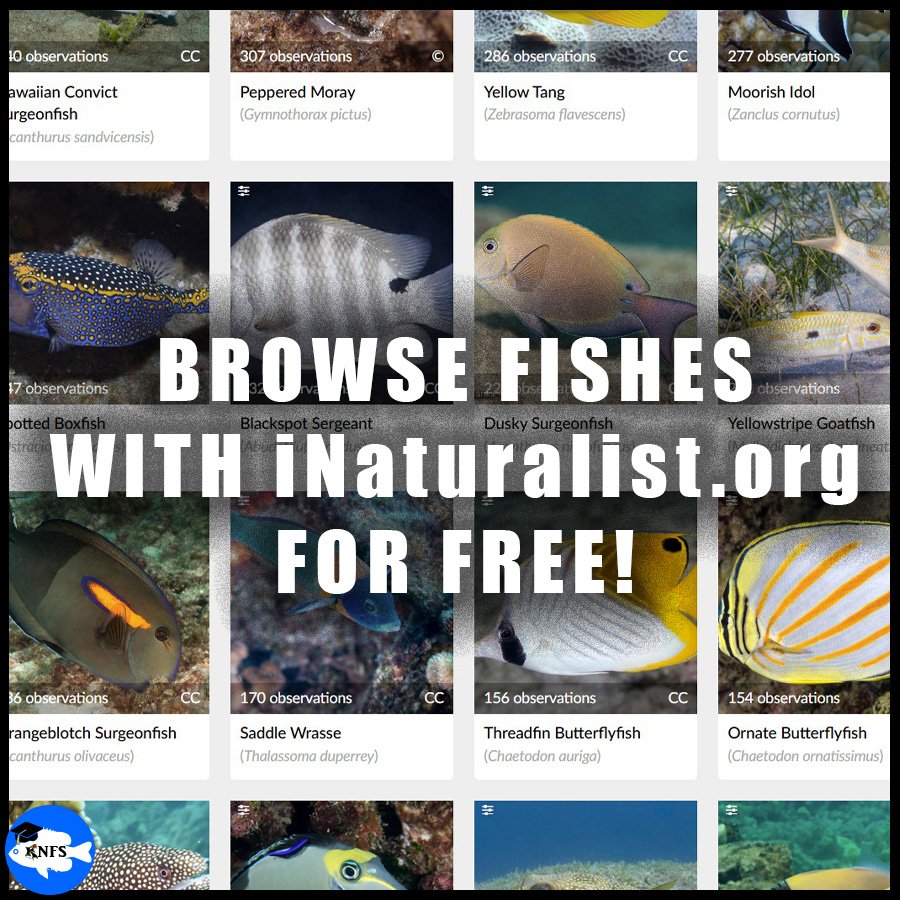
iNaturalist: This is a free-to-use app that is essentially a giant database of wildlife observations around the world. I use iNaturalist frequently for most all of my endeavors in the outdoors, including fishing. iNaturalist is a free resource that will allow you to see what species live in what waters. You can get a good grasp of where other people have caught fish and what they’ve been catching. Furthermore, you can use iNaturalist to help you identify a fish. We’ll talk more about fish identification later in the guide and I’ll show you have to get started navigating the iNaturalist app/webpage.
Fishing Apps: Fishbrain and FishAngler are two apps that may help you discover what fishes are being caught in the waters near you. These apps are free-to-use except for the premium features. You can still get a general idea of where people have been fishing and what they’ve been catching without paying for the premium services. You will have to pay if you want more detailed fishing locations and catch information.
NEXT: License & Regulations