
Can you see the extra gear being used in this photo that wasn’t listed as essential in the ‘Basic Gear’ section?
Once an angler has all the necessary gear to go fishing, as we discussed on the ‘Basic Gear’ and ‘Basic Tackle’ pages, they may want to commit more to sportfishing and purchase gear that allows for more efficient fishing and adventuring possibilities.
Useful gear makes fishing experiences that much more enjoyable.
There are thousands upon thousands of fishing products on the market. We’ll cover the most important ‘Extra Gear’ purchases for novice anglers. I encourage anglers to save money when they can by finding good deals at local thrift stores, garage sales, and estate sales.
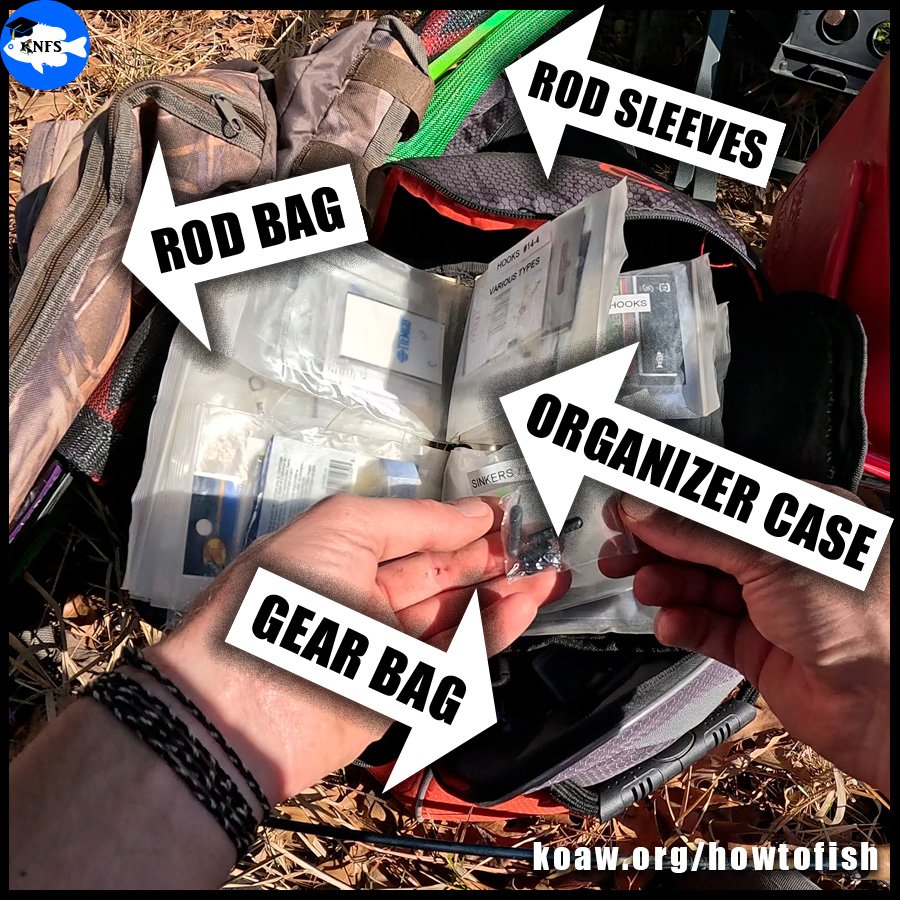
Some of the fishing gear Koaw took with him on a trip through the southern United States.
Before buying a piece of gear, ask yourself, “Will I actually use this?”
I know I’ve made a couple purchases of fishing gear that I’ve only used once—and now that gear rests in my fishing overflow storage, probably never to be used again. Before spending the money, decide if the item will be used enough to be worth the money spent.
Below will go over extra gear that I bring with me on almost every fishing outing.
*These are affiliate links to Amazon to help with your search for the perfect gear. Most items below are the exact models and brands I use to enjoy fishing.

Trust me…you’ll want polarized sunglasses.
POLARIZED SUNGLASSES
A pair of polarized sunglasses is essentially a must-have for an angler.
Besides the protection that sunglasses will provide to the eyes from ultraviolet radiation, polarized sunglasses allow an angler to pierce a gaze through the glare on the water.
Being able to see into the water with more clarity is almost like a cheat-code in a videogame.
When I don’t have my polarized sunglasses, I feel like I’m fishing naked.
You don’t need expensive polarized sunglasses. I usually buy cheap $5 - $7 pairs I pick up at Wal-Mart of polarized sunglasses because I tend to break, or at least scratch, sunglasses all the time. The ones I’ve linked I have not tried but are affordable and recommended by others.
TACKLEBOXES
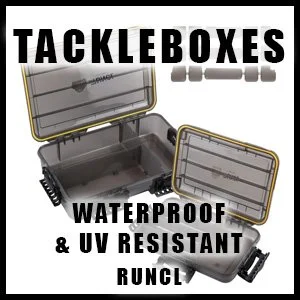
Koaw uses this same model!
Tackleboxes become very useful once an angler starts gathering more and more tackle. Cheap tackleboxes are always a possibility if money is tight. However, quality tackleboxes can last decades, if not more.
I recommend at least getting tackleboxes that are waterproof, and as an added improvement, have ultraviolet protection.
QUICK TIP: Don’t leave your tackleboxes in direct sunlight for too long. The composition of many lures makes them susceptible to damage from extreme heat and overexposure to ultraviolet radiation.
TACKLE ORGANIZER CASE
When I got my first organizer case I wondered how come I never bought one sooner.
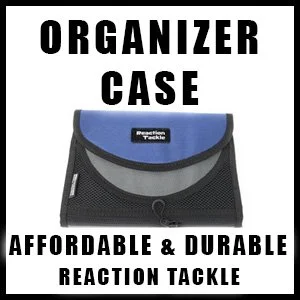
Koaw uses this same model!
An organizer case is perfect for storing and organizing various hooks, small weights, pre-rigged leaders, as well as storing miscellaneous fishing items.
The Reaction Tackle organizer case in the adjacent image has performed nicely for six years now—and I beat the sh** out of my gear. The Velcro, amazingly, is still holding up and all the bags are still intact. I imagine it will give me more years of work before it needs to be retired.
GEAR BAG
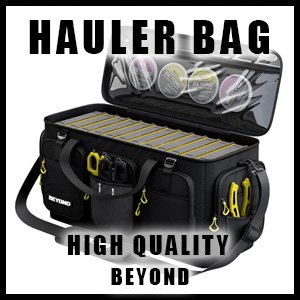
Koaw uses this same model!
Once your collection of tackleboxes loads up, you’ll need a way to carry them around. A gear bag is designed to snuggly fit the standard-sized tackleboxes as well as have compartments for other fishing gear like pliers, line, and even a smartphone.
The Beyond hauler bag in the image that links to Amazon is one that I’m loving.
This bag carries so many boxes of my big musky baits as well as my small plugs. The side compartments also snug in my smaller boxes and soft plastic bags.
I bought the extra-large version but they also have a large and medium of this design.
Gear bags come in variety of forms, mainly divided into those that are worn on the back (essentially a backpack) and those that have handles (and usually a single shoulder strap.) I usually have a camera backpack on my back, so I prefer having the handle/single shoulder strap version of gear bags.
ROD ORGANIZER CARRYING BAG
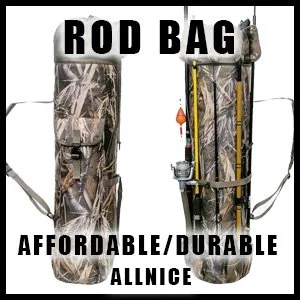
Koaw uses this same model!
If you are an avid shoreline angler carrying around more than one rod, I’d suggest getting a rod carrying bag.
I picked up an affordable one (in the adjacent image) about a decade ago and that bag still works well to this day—not a zipper or latch has failed yet (and I beat up all of my gear!)
A carrying bag is nice not only for the ease of travel with the rods, but also at the fishing location it’ll keep me organized, allowing me to keep the rods in a central location. The central storage of the bag is also spacious, allowing me store extra items such as a sleeping bag if on a camping trip.
ROD SLEEVES
A good rod deserves some extra protection. Buying a rod sleeve is a way to protect the shaft and guides on a rod from slight bumps and potential scratches. I am constantly taking my rods into the woods and into thick brush. A rod cover is also protecting my fishing line from unexpected dings and grabbing of thorns. Neoprene rod sleeves (or socks) will offer better protection.
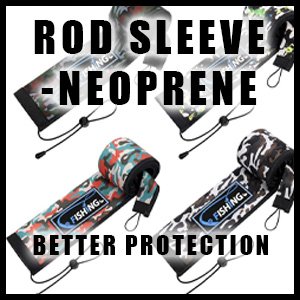
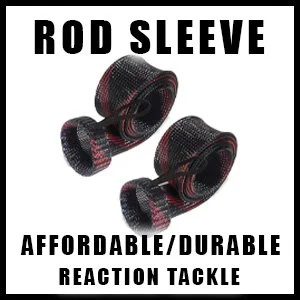
Make sure you get a rod sleeve long enough for your rod!
MEASURING BOARD / TAPE
A foldable measuring board is absolutely convenient for shoreline and boat fishing.
The Rapala versions have done me well—they are lightweight, come with a nose-stop, and are thick enough to keep most of my big catches on.
The 60” board is one I’ve purchased twice just so I have one in my rod bag for field excursions and one for the boat.
If a measuring board is too much, at least get a measuring device that won’t rust. Sometimes this is as simple as putting a large ruler sticker inside the boat.
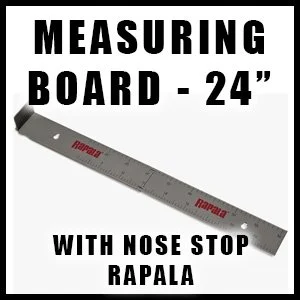
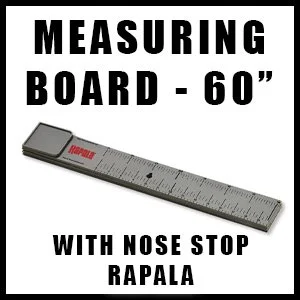
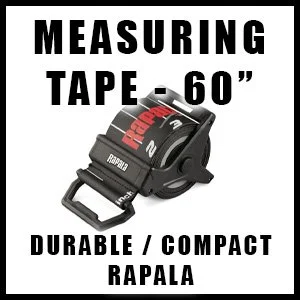
If harvesting fish, a measuring board is most often a must-have so as to follow the regulations.
FISH SCALE + FISH GRIPPER/GRABBER
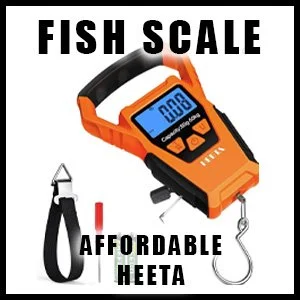
For the more serious angler that is determined to know the weight of a fish, that’s when they should invest in a fish scale. There are numerous scales on the market. Generally, there are two types of scales—those that are held by the hand and the weight of the fish is supported by some mechanism and those that sit on a flat surface where the fish is placed on top of the scale.
Most anglers use the hanging scale versions because they are more portable. I have a number of hanging fish scales, and really, all of them still read accurately. The Heeta model is the same I have (though this design has been sold under various brand names';) it’s affordable and has kept accurate readings. (I check my scales with a calibration weight to make sure they are accurate.)
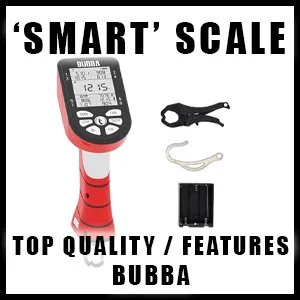
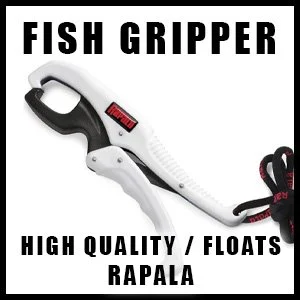
Tournament anglers should seriously consider a more high-end scale—sometimes referred to a ‘smart scale’.
Smart scales offer features of convenience that save time and help with decision making during a tournament. Good ones are not cheap—I’ve linked a highly recommended BUBBA scale. This one comes with the fish grabber.
WEIGH BAG
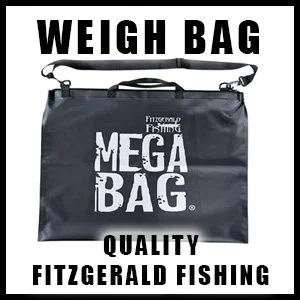
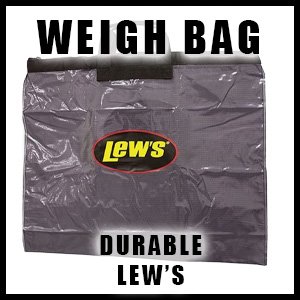
A weigh bag is useful beyond just being able to weigh fish in. I often use a weigh bag when I’m hiking into a spot to keep fish alive before harvest and/or keep them temporarily before taking photos.
Tournament anglers often need weigh bags to bring their fish to the weigh-in officials. The Lew bag is one that I use—but there are many options out there.
FILET KNIFE
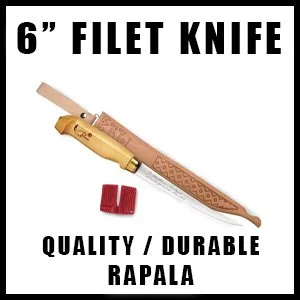
If you plan on harvesting fish then you’ll definitely want a good filet knife.
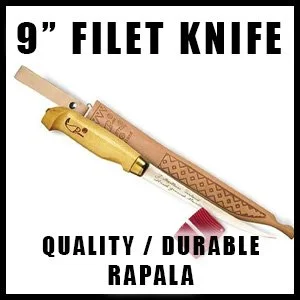
I’ve used my 6” and 9” Rapala filet knives for longer than I can remember.
A smaller blade is useful for smaller species but also for the more delicate, precision cuts on larger species. The larger blade is nice for pulling those large cuts of meat from the skin. Treat your knives right with gentle washing after fileting and the required sharpening maintenance.
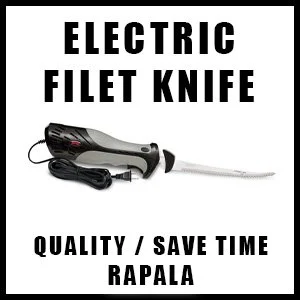
Anglers bringing in their bag limits of small panfishes (like crappies) should really consider an electric filet knife. (Better to get a quality one than a cheap one.)
I have a buddy who exclusively crappie fishes and he can make quick work of getting filets off of his daily 25 bag limit using his electric knife.
RUBBER LINED NET
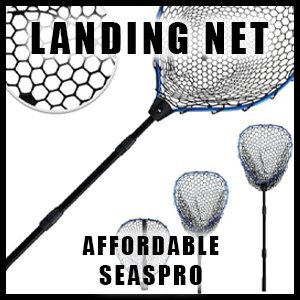
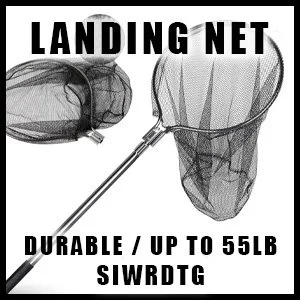
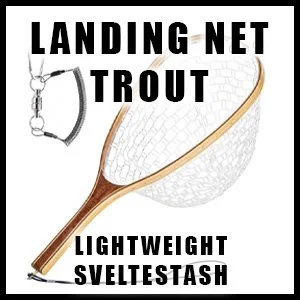
A landing net may be essential for an angler fishing for delicate species (like salmonids in streams) and for big game species. Landing nets are great for helping to secure the fish during those last moments of the fight. An angler can leave the fish in the water while dehooking.
Make sure to check your net frequently for tears and other possible damage.
I’ll update and add to these items in time!
Back to the main page of Koaw’s Guide to Fishing.